Esomar Awards 2026: Nextatlas Recognized for Excellence in Global Research
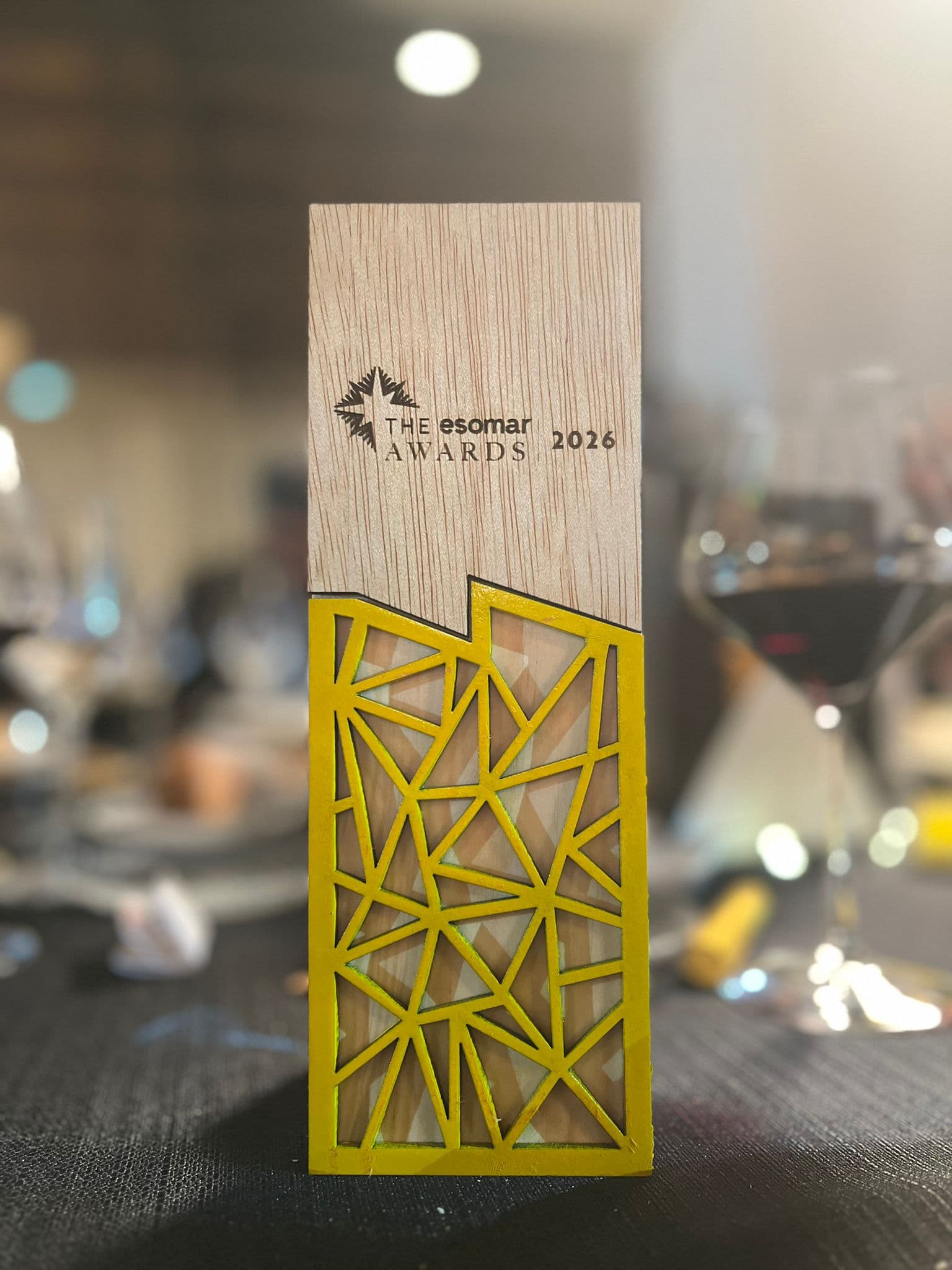
Nextatlas won Silver for Excellence in Global Research at the Esomar Awards 2026 for "Foresight as a Service: The Agentic Data Layer." At the same Congress in Valencia, Mario Coletti and Serhiy Kalinovsky of Mondelēz International presented Gastronomy Radar on the main programme.
Nextatlas won Silver in the Excellence in Global Research category at the Esomar Awards 2026, announced at the Esomar Congress in Valencia on September 1 to 4, 2026. The award recognizes "Foresight as a Service: The Agentic Data Layer," the capability that puts Nextatlas' verified early-adopter intelligence directly inside the AI tools research teams already use.
The same week, Mario Coletti, Managing Partner at Nextatlas, and Serhiy Kalinovsky, Strategic Foresight Global Lead at Mondelēz International, presented Gastronomy Radar on the Congress main programme. One award, one talk, one message: foresight works best when it reaches decisions early and lives inside the workflow.
What Nextatlas won at the Esomar Awards 2026
The Esomar Awards honor the most impactful work in the global data, research, and insights profession. Nextatlas was shortlisted in July 2026 for Excellence in Global Research, alongside Time Out and Rival Technologies, KFC and SixthFactor Consulting, Accenture and CloudArmy, and Coca-Cola and Human8. At the awards ceremony in Valencia, the independent judging panel awarded Nextatlas Silver.
The submission covered a capability, not a single project. The Agentic Data Layer is the infrastructure that turns a decade of Nextatlas foresight into a service any AI assistant can query.
What the Agentic Data Layer is
General-purpose AI models are trained on public information. They summarize what is already known. They cannot see what has not happened yet. The Agentic Data Layer closes that gap by connecting Nextatlas' proprietary observation pool of 300,000+ early-adopter profiles, its forecasting engine, and its vertical taxonomies to the tools where research teams already work.
Three integration paths:
- MCP connector. Ask a question in Claude or another AI assistant and get an answer grounded in verified behavioral signals, documented lead times, and quantified accuracy.
- REST API. Pull timelines, entities, and forecasts into internal dashboards and agents.
- Custom enterprise endpoints. Purpose-built feeds for client workflows, as in the Mondelēz International integration cited in the entry.
The result is foresight that travels. No separate dashboard, no waiting for a report. Read more about AI trend intelligence integration.
Gastronomy Radar on the Esomar Congress main programme
On Wednesday, September 3, Mario Coletti and Serhiy Kalinovsky took the stage in the Emergence track with "Mondelez International Gastronomy Radar with Nextatlas: Predicting the Next Wave of Food Flavours and Ingredients."
The talk opened with the cerulean scene from The Devil Wears Prada. A color chosen on a runway ends up, years later, in a bargain bin. Food innovation has the same timing problem. Tomorrow's flavor starts in gastronomy: high-end chefs, artisanal producers, food critics, culinary schools, fine dining. The mainstream catches up later. Za'atar and yuzu both followed that path, from a chef's cookbook or documentary to a wave of global product launches years afterward.
Gastronomy Radar makes that head start measurable. The UK pilot in numbers:
- 4,200 gastronomy Key Opinion Leaders tracked
- 1.1 million posts across three years of history
- 29,000 unique ingredient and flavor signals, scored on growth and engagement
- 14 clusters of interest selected with Mondelēz for deep-dive
- 93% prediction accuracy on Gastronomy Radar
- Detection lead time of up to 3.5 years before mass-market adoption
How Gastronomy Radar works
The method runs in four steps, built by Nextatlas foresight scientists on a base of 300,000+ early adopters, 6 million+ concepts tracked, and ten years of benchmarked signal data.
- Panel creation. Detect gastronomy posts through category keywords and correlated mentions, identify the accounts behind them, review and fine-tune.
- NLP analytics. Extract flavors, ingredients, taste profiles, and food categories from every post.
- Taxonomy and clustering. Aggregate attributes in a hierarchical taxonomy co-designed with Mondelēz, then score them on growth, engagement, and volume.
- Analysis and reporting. Cluster attributes by shared characteristics, prioritize the high-growth ones, surface the most promising directions.
Every signal lands on a dual-axis map: weighted year-over-year growth against total engagement, with the median as the cut. Four quadrants tell teams when to act. Emerging Discoveries are small and rising fast. Sizzling Sensations are already popular in gastronomy and still growing. Culinary Mainstays are popular with a plateauing curve. Niche Specialities stay small and serve specific tastes or occasions.
Each of the 14 clusters, from cardiometabolic health and longevity boosters to exotic fruits and warm spices, is linked to the Mondelēz trend framework and comes with a ranked list of star ingredients, food-category over-indexes, and a ready template for category ideation sessions. The UK pilot was validated in Q1 2026. The same method now rolls out across new markets on five continents, with a live dashboard replacing periodic reports.
What this means for insight teams
First to the signal, first to the strategy. Gastronomy KOLs signal trends years before the mainstream, and the talk closed on four shifts that follow from that.
- Always-on monitoring. Continuous scoring replaces the one-off survey.
- Replicable system. One method, any new market.
- Strategic windows. Growth by engagement maps when to act.
- Co-designed outputs. Built with the client, directly actionable.
The award and the talk point the same way. Foresight spent decades inside reports and annual subscriptions. It is becoming a service that reaches every decision, from an AI assistant to a live category dashboard. The industry conversation is shifting from how fast AI can synthesize to how reliable the underlying data is. Esomar's recognition confirms that verified, methodologically sound data layers are what separate foresight from guesswork.
Esomar Congress 2026: quick facts
What did Nextatlas win at the Esomar Awards 2026? Silver in the Excellence in Global Research category, for "Foresight as a Service: The Agentic Data Layer."
Who presented Gastronomy Radar? Mario Coletti, Managing Partner at Nextatlas, and Serhiy Kalinovsky, Strategic Foresight Global Lead at Mondelēz International.
What is Gastronomy Radar? An AI social listening system that monitors professional gastronomy communities to detect flavor and ingredient trends up to 3.5 years before mass-market adoption.
When and where was Esomar Congress 2026? Valencia, Spain, September 1 to 4, 2026, under the theme Metamorphosis.
See award-winning foresight inside your own workflow
A call with the Nextatlas team covers a live query of the Agentic Data Layer on your category and the integration path that fits your tools.
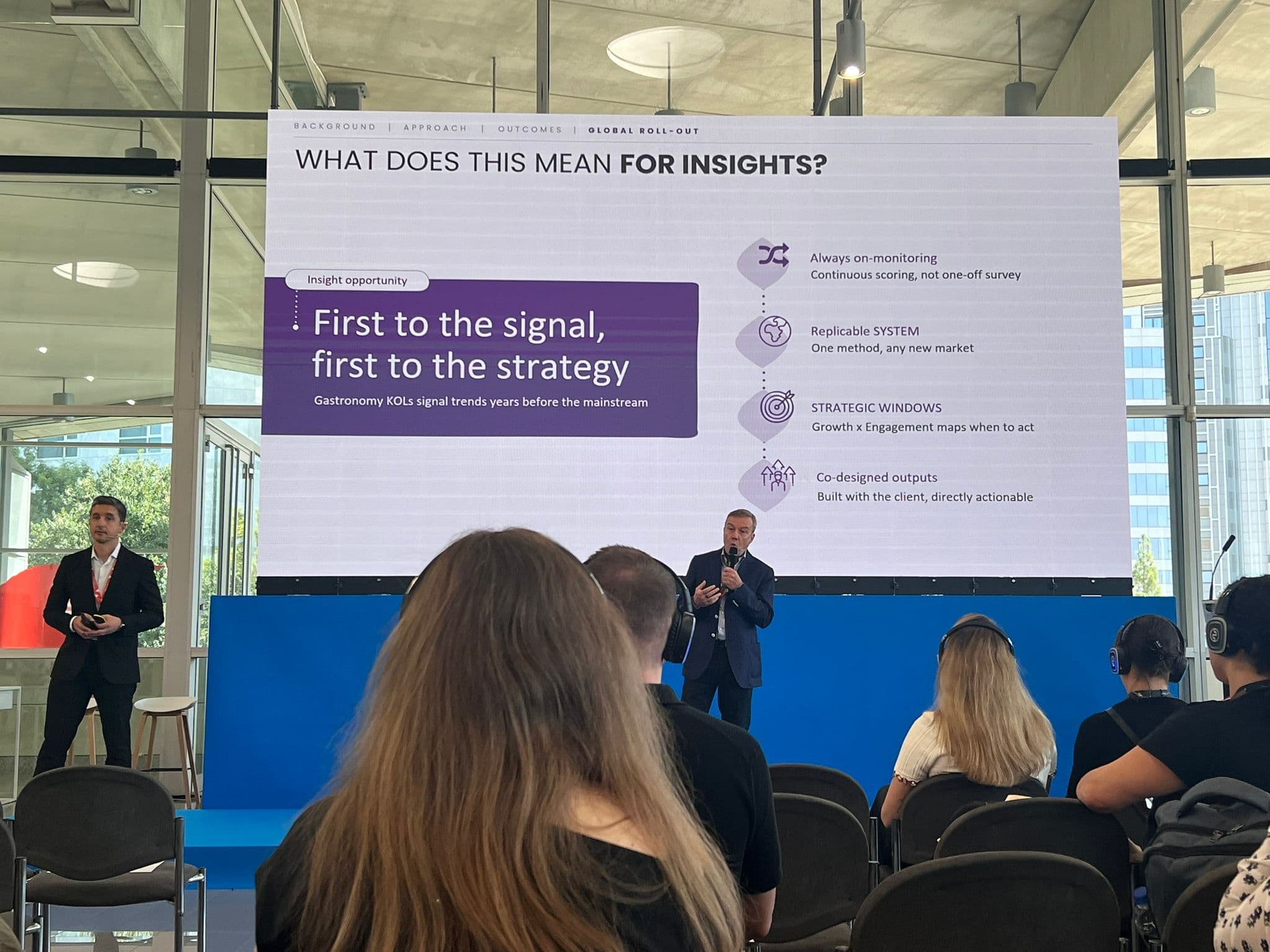
Mario Coletti (Nextatlas) and Serhiy Kalinovsky (Mondelēz International) present Gastronomy Radar at Esomar Congress 2026, Valencia, September 3.
Trend lines, data, and information described in this article emerge from the ongoing analysis performed by Nextatlas on its global observation pool made of innovators, early adopters, and industry insiders. Discover Nextatlas Methodology →