Chrono Cultures: Designing Your Identity Across Time
Time is becoming a creative material, with consumers layering past, present, and future to construct identity, reshape time perception, and reject effort as a marker of worth. From financial services to beauty and entertainment, it's a shift away from optimisation and speed towards continuity, ease, and time as an experiential resource.
Time is becoming a creative material, with consumers layering past, present, and future to construct identity, reshape time perception, and reject effort as a marker of worth.
The full version of this trend, along with multiple business case studies, is available to read in our “Unknown Unknowns 2026” trend report.
What Is Changing?
In response to global volatility, acceleration, and cultural uncertainty, consumers are developing a new kind of temporal imagination — one that moves fluidly between past, present, and future. Rather than treating time as a scarce resource to optimise, people are beginning to experience it as a narrative material: something to be layered, rehearsed, edited, and emotionally shaped.
In this context, products, services, and experiences are increasingly valued for their time horizon rather than their immediate utility. Objects are treated as future heirlooms, experiences as time capsules, and brands as companions that help people anchor themselves across decades. Value shifts away from instant gratification and towards emotional continuity — how something will be remembered, revisited, or reinterpreted over time.
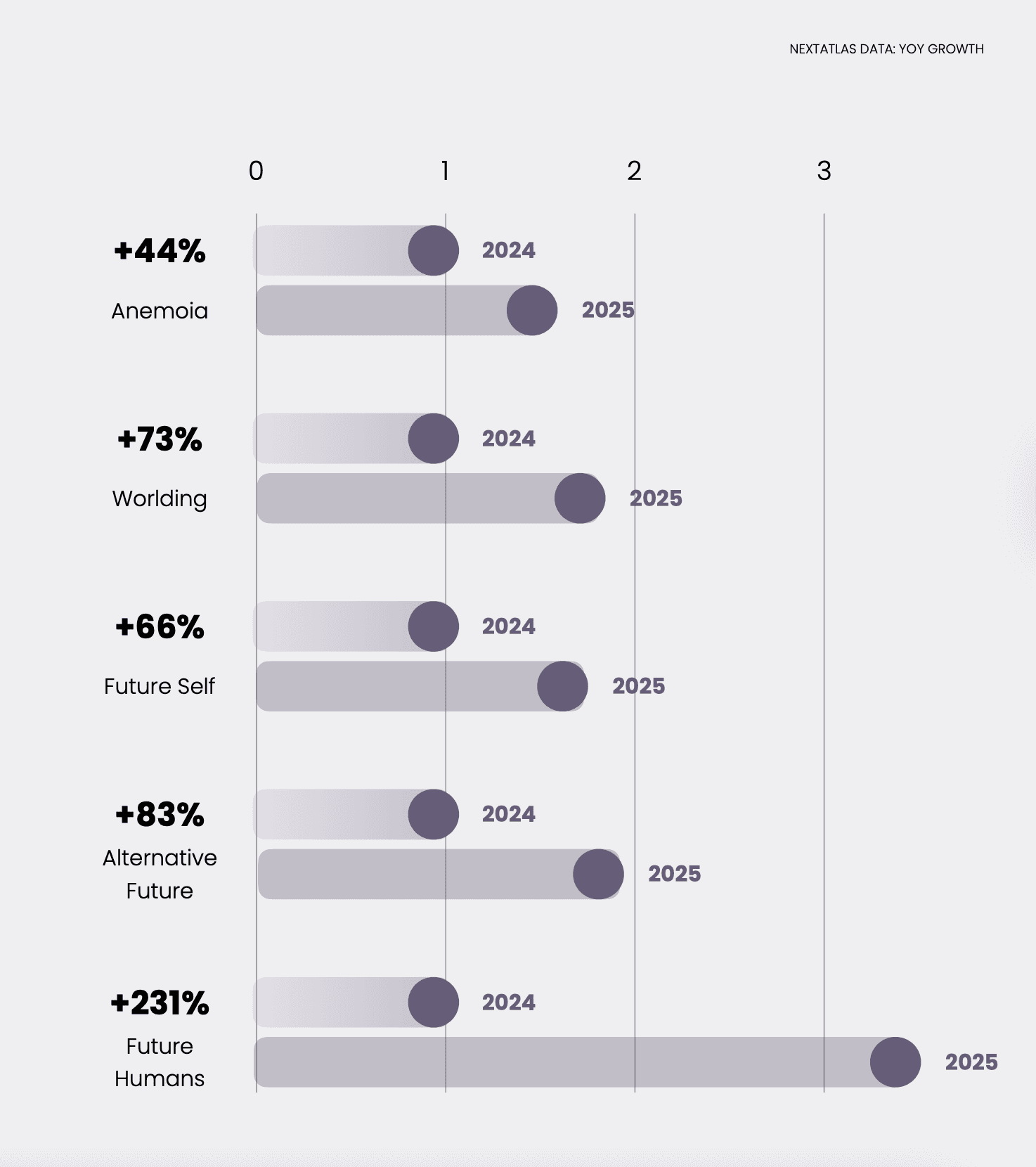
Nextatlas Data: year-over-year growth of relevant keywords related to the trend "Chrono Culture" that proves the cultural shift
Time as a Site of Emotional Design
Chrono Cultures signal a decisive break from the logic of speed and optimisation. Time is no longer something to be saved or spent efficiently, but something to be felt, stretched, protected, or even deliberately wasted. As effort loses its moral weight, ease, low maintenance, and temporal freedom become new markers of sophistication.
Financial services, beauty and cosmetics, and media and entertainment are emerging as leading arenas where Chrono Cultures take material form. Whether through long-term financial storytelling, low-effort beauty routines, or entertainment that actively shapes perception and anticipation, the market is beginning to respond to a shared cultural demand: not to move faster, but to feel more grounded across time.
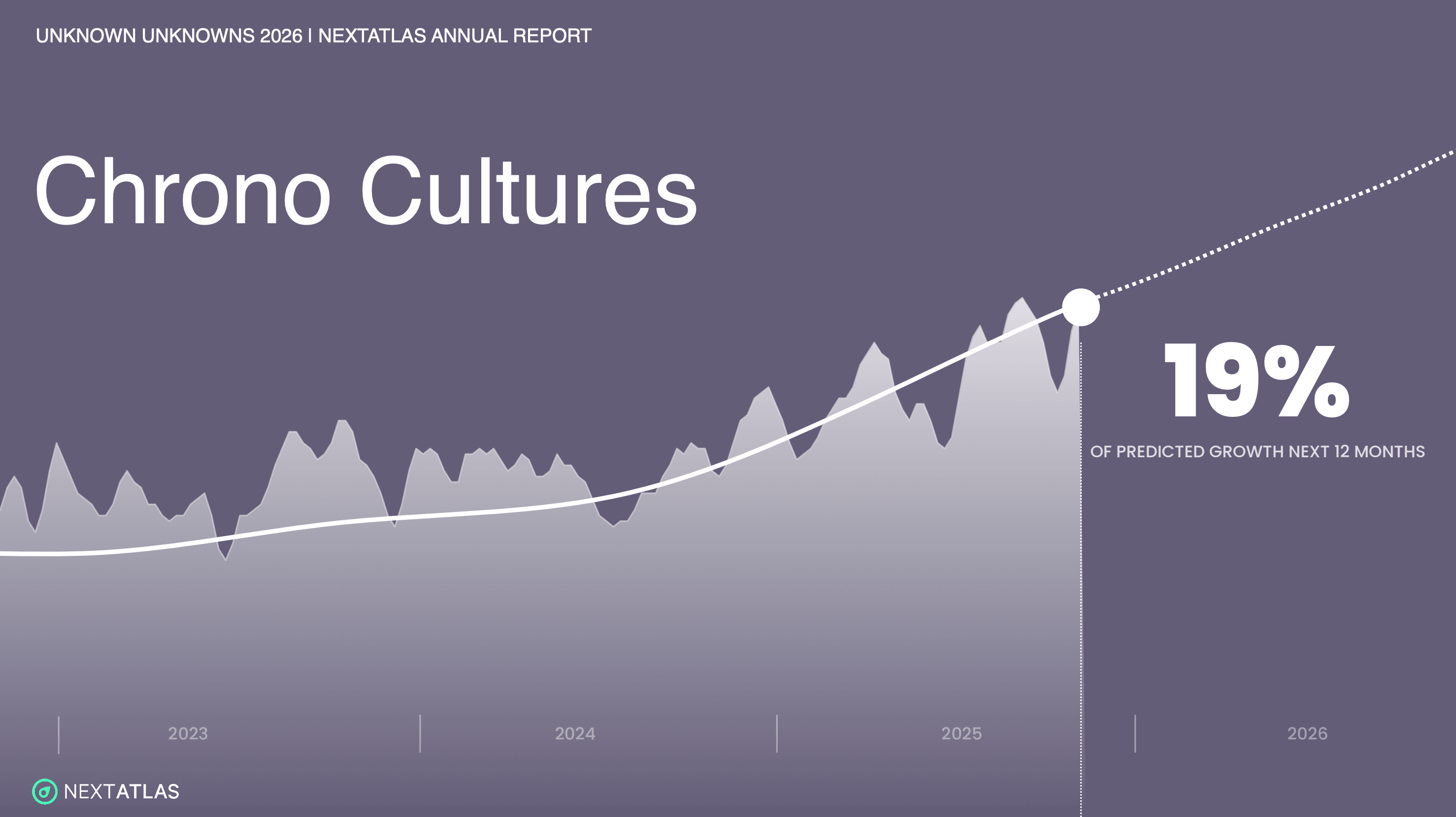
Nextatlas Data: prediction of growth over the next 12 months from the 2026 trend report
Layering Lifetimes Beyond Linear Time
Across culture, consumers are nostalgic for moments they never lived, while simultaneously rehearsing futures that have not yet arrived. The past becomes editable, the future becomes a space for experimentation, and the present turns into a point of negotiation between multiple selves. Identity is no longer built through linear progression, but through temporal layering — revisiting formative moments, reconciling unfinished chapters, and projecting imagined futures as a way of stabilising the self.
Consumers are no longer moving neatly from past to present to future. Instead, they are curating these moments simultaneously — reparenting past selves, negotiating present habits, and rehearsing future identities in parallel. Memory is treated as material, not archive; the future as something to be prototyped, not predicted.
This shift requires brands to abandon linear storytelling — the traditional arc from heritage to innovation — and learn to operate in temporal simultaneity. Relevance now depends on helping consumers hold multiple versions of themselves at once: who they were, who they are, and who they are becoming.
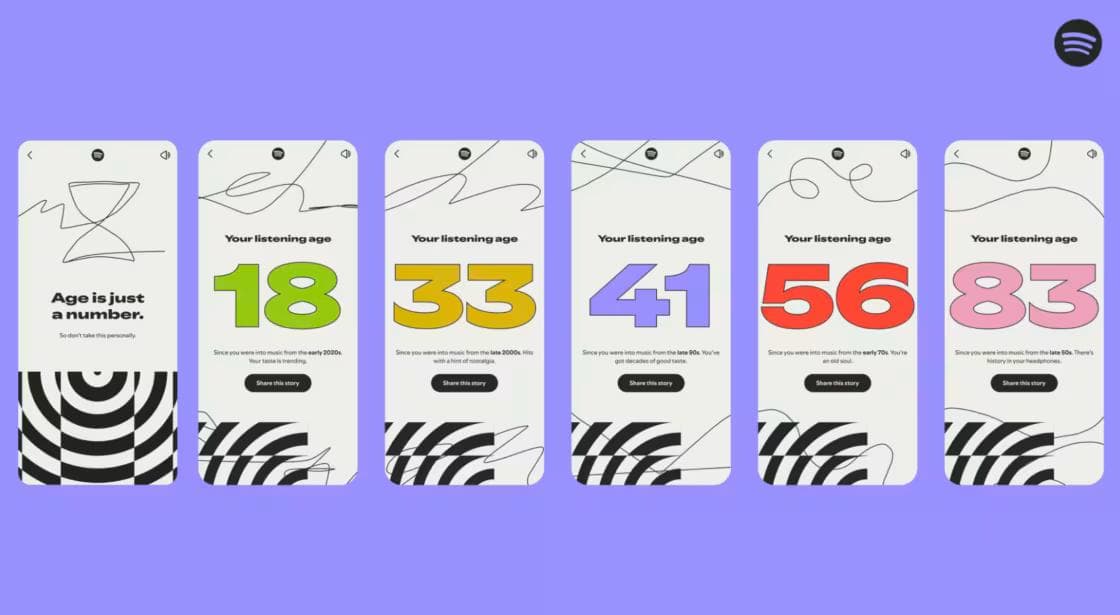
Spotify Wrapped 2025 incuded a new "Listening Age" feature, comparing your musical tastes to others’ in your age group based on the release years of the tracks you listen to most (credits: Spotify)
Shaping How Time Feels
As culture moves beyond obsession with speed, a new curiosity emerges — not about how much time we have, but how we experience it. Consumers are experimenting with ways to stretch, compress, and reframe duration through sensory, spatial, and emotional cues.
Time becomes experiential rather than transactional. The opportunity for brands lies not in saving minutes, but in reshaping perception — altering rhythm, anticipation, and presence so that a moment feels deeper, slower, or more meaningful. In this landscape, time itself becomes a design material.
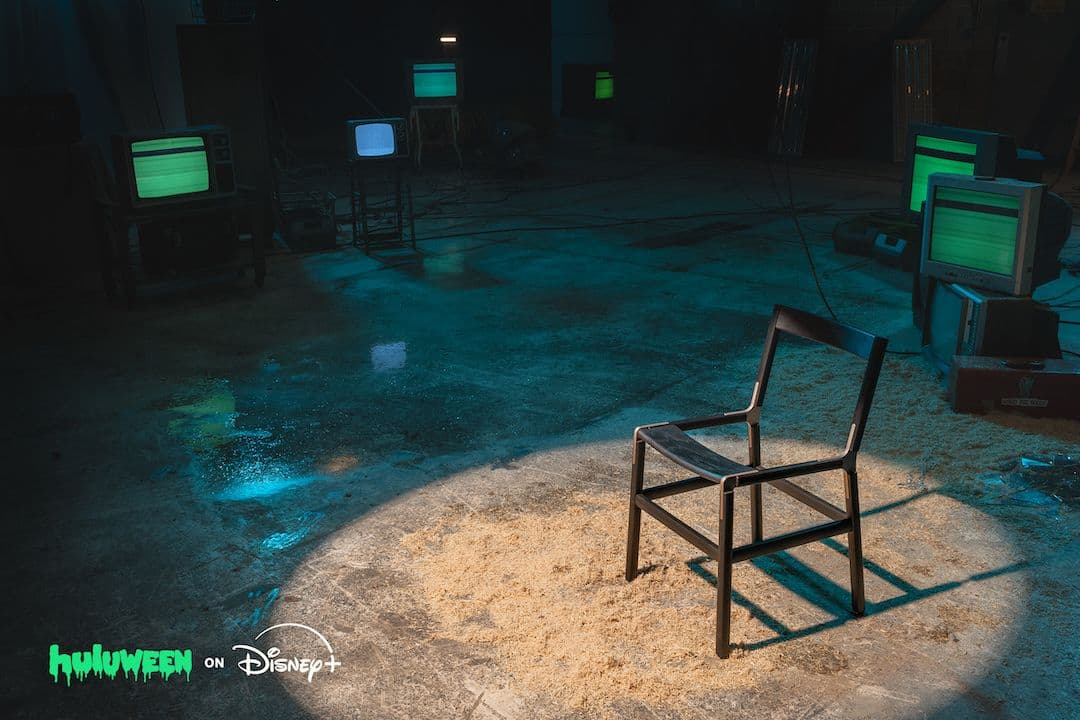
Disney+’s EDGEØFYØR Seat uses deliberate physical discomfort to stretch the perception of time, transforming suspense from a narrative device into an embodied experience that heightens anticipation and focus (credits: Disney+ / CALLEN)
Doing Less With Time Is Power
After years of hustle culture and optimisation, effort has lost its cultural prestige. Consumers no longer seek proof of discipline or consistency; instead, they gravitate towards ease, low maintenance, and emotional spaciousness.
Time is no longer a means to an end, but the end itself. Being able to waste time — without guilt — becomes a form of autonomy. Innovation is redefined as liberation: not enabling people to do more, but allowing them to feel free doing less. Products that remove friction, obligation, and upkeep are no longer shortcuts; they are expressions of intelligence and care.
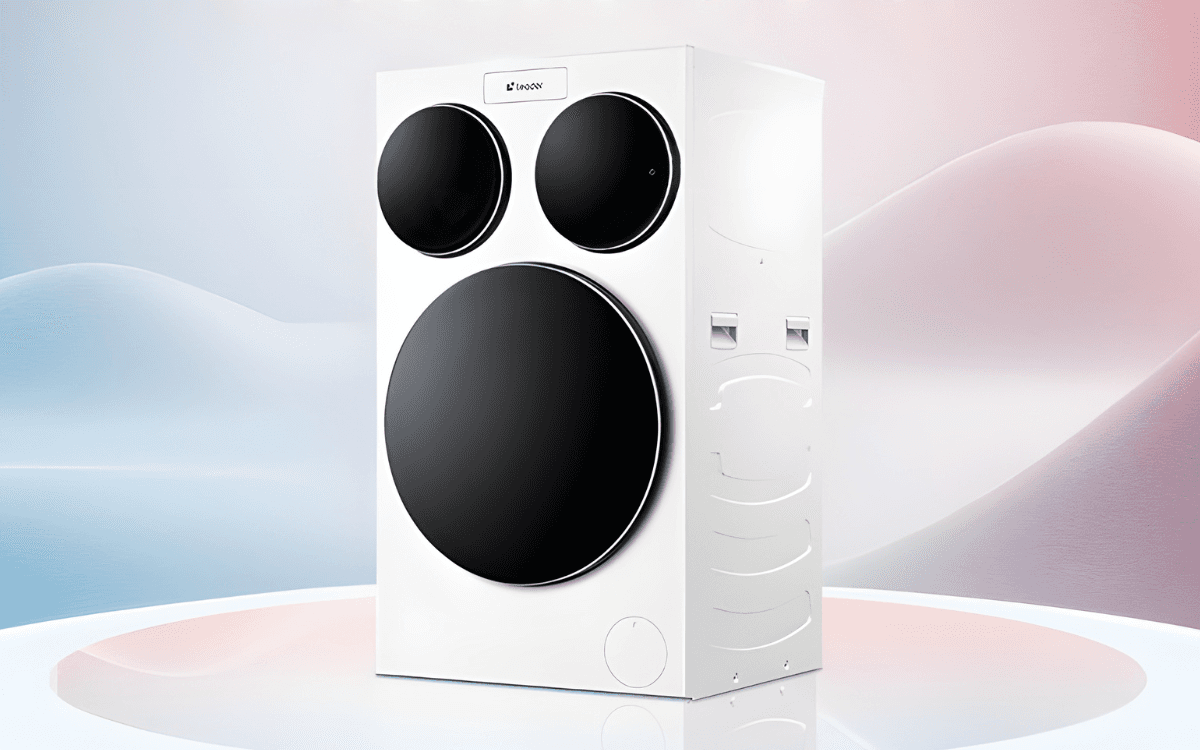
Haier’s three-tub washing machine reframes “doing less” as intelligent design, turning laundry into an act of time liberation rather than efficiency (credits: Gizmochina)
Actionable Insights for the top Industries impacted by Chrono Cultures
- Fiancial: financial products are now tools for temporal coherence. Solutions that connect past lessons, present behaviours, and future goals resonate more deeply than those focused purely on optimisation or control. Finance becomes an act of self-continuity — helping consumers understand their relationship with money across life stages, rather than forcing linear progress or discipline.
- Beauty & Cosmetics: In beauty, Chrono Cultures fuel the rejection of effort-based ideals. Products that remove maintenance, simplify routines, and quietly “work in the background” align with consumers’ desire to reclaim time. Innovation shifts from performance and consistency to release, ease, and emotional relief — reflecting a broader cultural move away from self-surveillance.
- Media & Entertainment: Entertainment brands are increasingly expected to shape time, not just occupy it. Consumers will favour experiences that manipulate rhythm, anticipation, and presence, turning content into a temporal experience rather than passive consumption. The future of entertainment lies in designing how time is felt — not how much content is delivered.
Stay ahead and request your custom trend analysis today!
Chrono Cultures is one of three key trends reshaping consumer behavior in 2026. Brands that adapt will stay relevant and build deeper connections. Contact us for a tailored analysis of what Chrono Cultures can unlock for your industry.
Trend lines, data, and information described in this article emerge from the ongoing analysis performed by Nextatlas on its global observation pool made of innovators, early adopters, and industry insiders. Discover Nextatlas Methodology →