How Home Repair Is Becoming the New Everyday Ritual
Backed by a measurably accelerating signal, fixing a broken appliance has become a gesture of identity: a quiet, deliberate act of refusal in a culture exhausted by disposability. As the Right to Repair legislative momentum is gaining traction, Nextatlas data shows how this is spreading into home appliances.
"The repair movement was never really about saving money" is the surface reading, and it's where most category analysis stops. The deeper story, now backed by a measurably accelerating signal, is that fixing a broken appliance has become a gesture of identity: a quiet, deliberate act of refusal in a culture exhausted by disposability.
Nextatlas early adopter data tells this story clearly. The repair café signal — community spaces built around fixing objects rather than replacing them — has grown +245% in measured engagement since 2022, with forecasts projecting continued climb toward saturation through 2026. That's not a niche hobbyist curve. That's a movement entering mainstream cultural legitimacy.
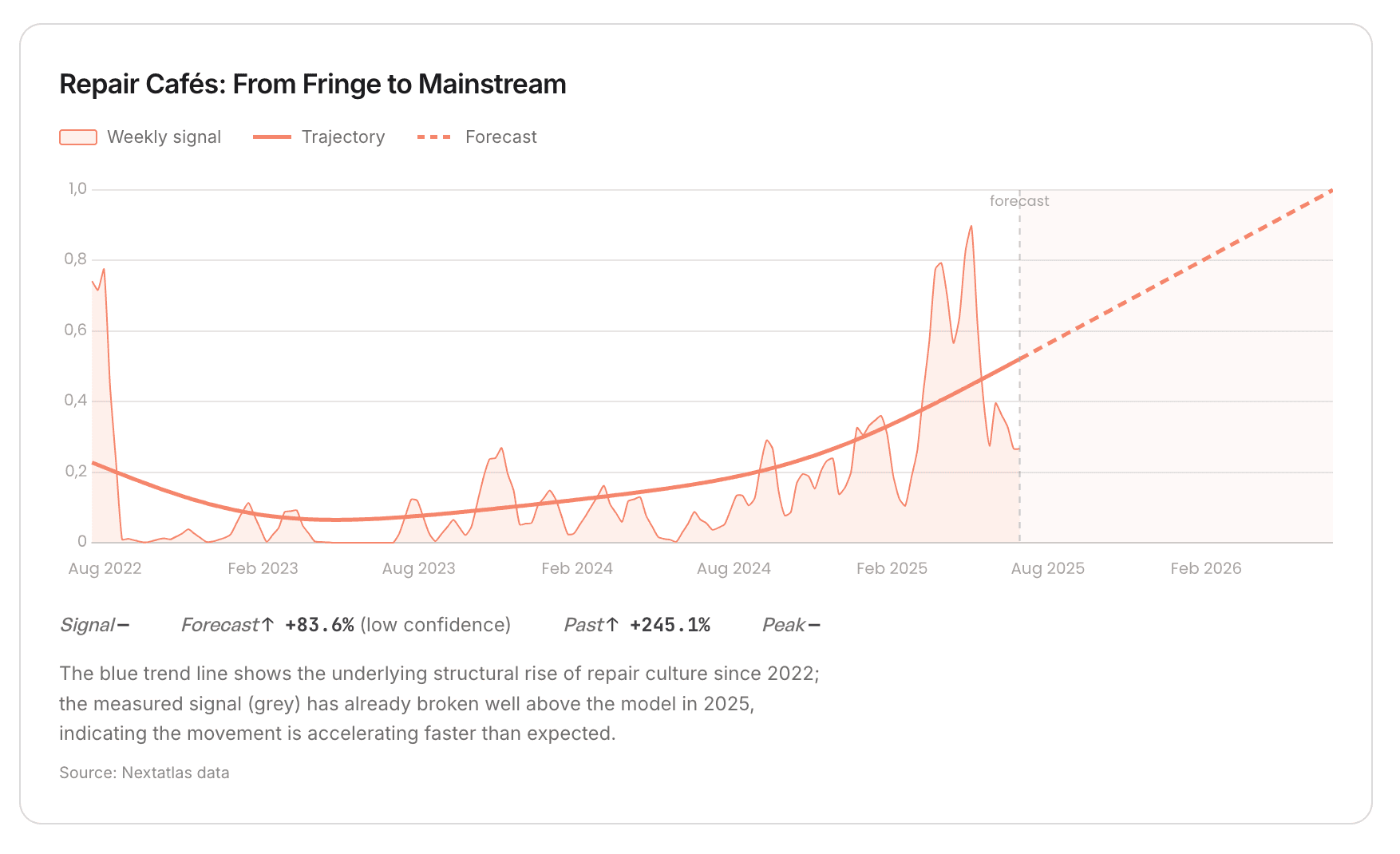
The spike in early 2025 — peaking around May — wasn't accidental. It maps directly onto a period of sustained cost pressure, Right to Repair legislative momentum across Europe and the US, and a broader post-consumption mindset shift that Nextatlas has been tracking across multiple categories.
The Appliance Is the Arena
What's changed is where repair culture has landed. It started with clothing (visible mending, upcycling, repair workshops), migrated into electronics (phone teardowns, laptop soldering), and is now embedding itself into home appliances, the category that had the most to lose from throwaway logic.
Philips' Fixables program — downloadable 3D-printable spare parts for their products — is the most structurally significant move in this space. It's a repair infrastructure, shifting the ownership of maintenance knowledge back to the consumer and embedding longevity into the product contract. This is the archetype that commoditizes fastest but also signals brand positioning intent most clearly.
Team Repair's Grown-Up Repair Kit launched this year goes one layer deeper: it addresses not just access to parts but access to confidence. The insight that adults hesitate to fix their own devices out of fear of making things worse is the unspoken emotional barrier this entire category needs to navigate. Team Repair often received covetous comments from adults about their kids' repair kit, and last year posted a TikTok video asking if they wanted a kit specifically for grown-ups, which quickly went viral.
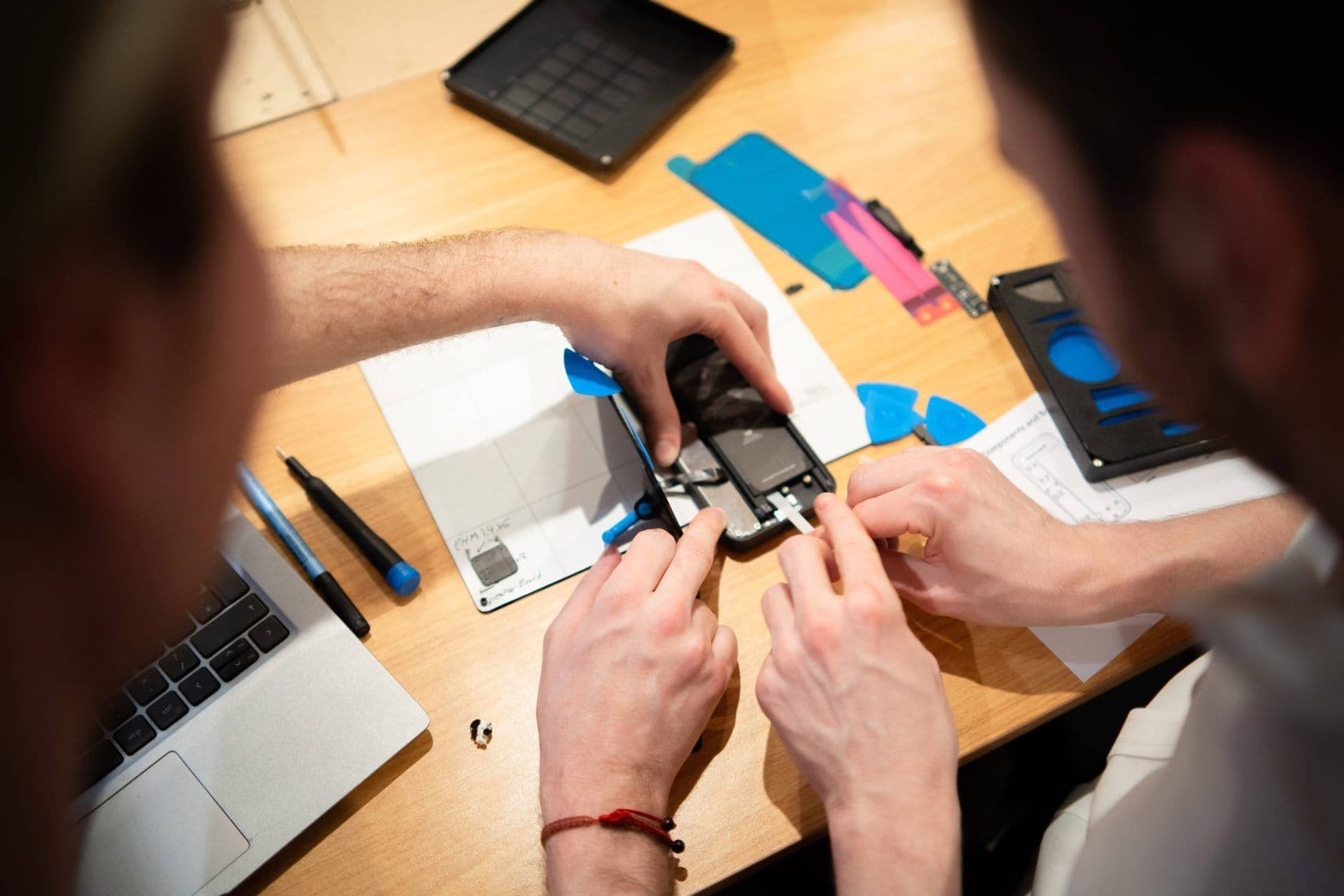
The Team Repair kits let users practice on a dummy phone to learn how to replace the battery and screen (credits: Team Repair)
Abodio's AI home management platform is the third archetype — maintenance-as-a-service, where the burden of knowing when and how to fix is offloaded to a digital layer. This plays to the same demand, but at a remove: it's repair culture for people who don't want to be repairers themselves. The white space nobody has claimed yet is the physical-plus-digital hybrid: guided repair with real-time diagnostic support built into the appliance itself.
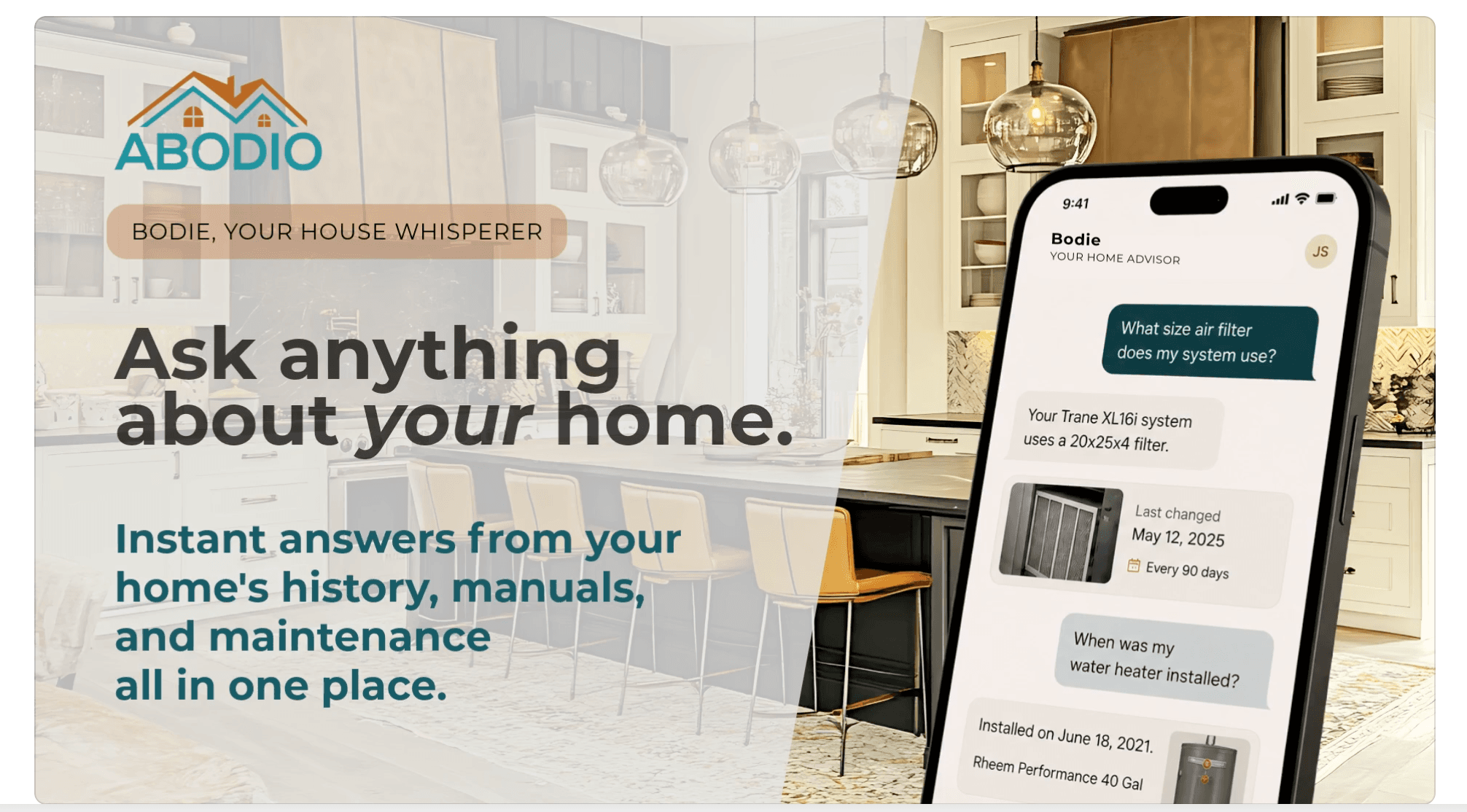
Credits: Abodio
The Demographics Driving This
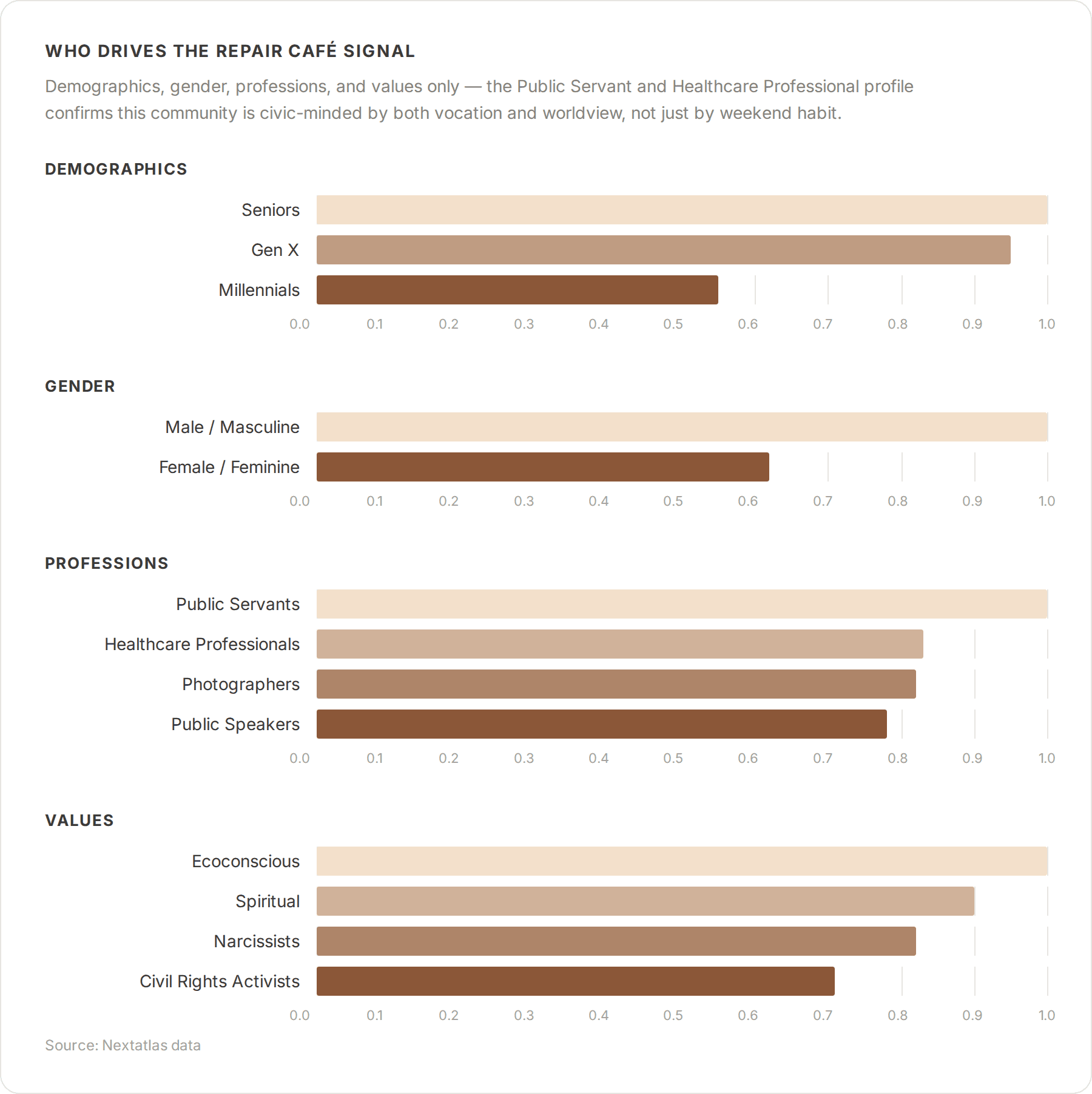
The repair café audience is not who you'd expect if you follow the sustainability-equals-Gen Z shorthand. Gen X and Seniors lead the signal, with Millennials as a growing third. Male-skewing, ecoconscious, and — critically — coded as Spiritual values alongside Civil Rights Activists: this is a community that frames repair as both personal practice and quiet political act. The wrench isn't just a tool; it's a statement about what things are worth.
The Commercial Implication
The top growing co-terms for repair shops include mechanic, brake, repairs, repaired — language that still lives in the automotive and heavy-goods frame. The gap that our emerging data show is being filled is specifically in domestic appliances: a repair shop for the washing machine, the air fryer, the induction hob in a format that feels like the bike repair shop equivalent — community-facing, craft-credible, competitively priced.
That is the unclaimed commercial territory the data opens. The brand that builds repair infrastructure into its appliance ecosystem — not as a warranty extension but as a cultural membership — owns the loyalty of a consumer who has consciously decided their relationship with objects is long-term. For appliance manufacturers specifically, the strategic question is not "how do we make repair easier?" but "how do we make repair something our customers are proud to do?"
Trend lines, data, and information described in this article emerge from the ongoing analysis performed by Nextatlas on its global observation pool made of innovators, early adopters, and industry insiders. Discover Nextatlas Methodology →