Subtext Literacy: The New Value of Ambiguity & Symbolism
Subtext Literacy will be a defining cultural shift for 2026 in which meaning moves from explicit messaging to nuance, ambiguity, and interpretation, showing how art & design, packaging & graphics, and architecture & spaces are leading the market by turning restraint, poetry, and absence into new sources of value and engagement.
As literal communication becomes ubiquitous, people increasingly seek ambiguity, symbolism, and poetic expression that invite interpretation rather than instant clarity.
The full version of this trend, along with multiple business case studies, is available to read in our “Unknown Unknowns 2026” trend report.
What Is Changing?
As AI perfects clarity, efficiency, and instant resolution, culture is experiencing an unexpected side effect: meaning fatigue. When every question is answered immediately, and every message is optimised for frictionless comprehension, attention gravitates towards what resists being fully understood.
Hyper-legible communication, algorithmic optimisation, and endlessly explained narratives are losing their ability to hold focus. Instead, consumers are rediscovering the pleasure of ambiguity — cryptic aesthetics, unfinished stories, minimal cues, and layered signals that demand interpretation rather than consumption.
This shift marks the rise of Subtext Literacy: a new cultural competence defined by the ability to read between the lines, to decode nuance, and to find meaning in what is left unsaid. In a world saturated with explicit messaging, value no longer lies in finding the answer, but in feeling the effort of unlocking it.
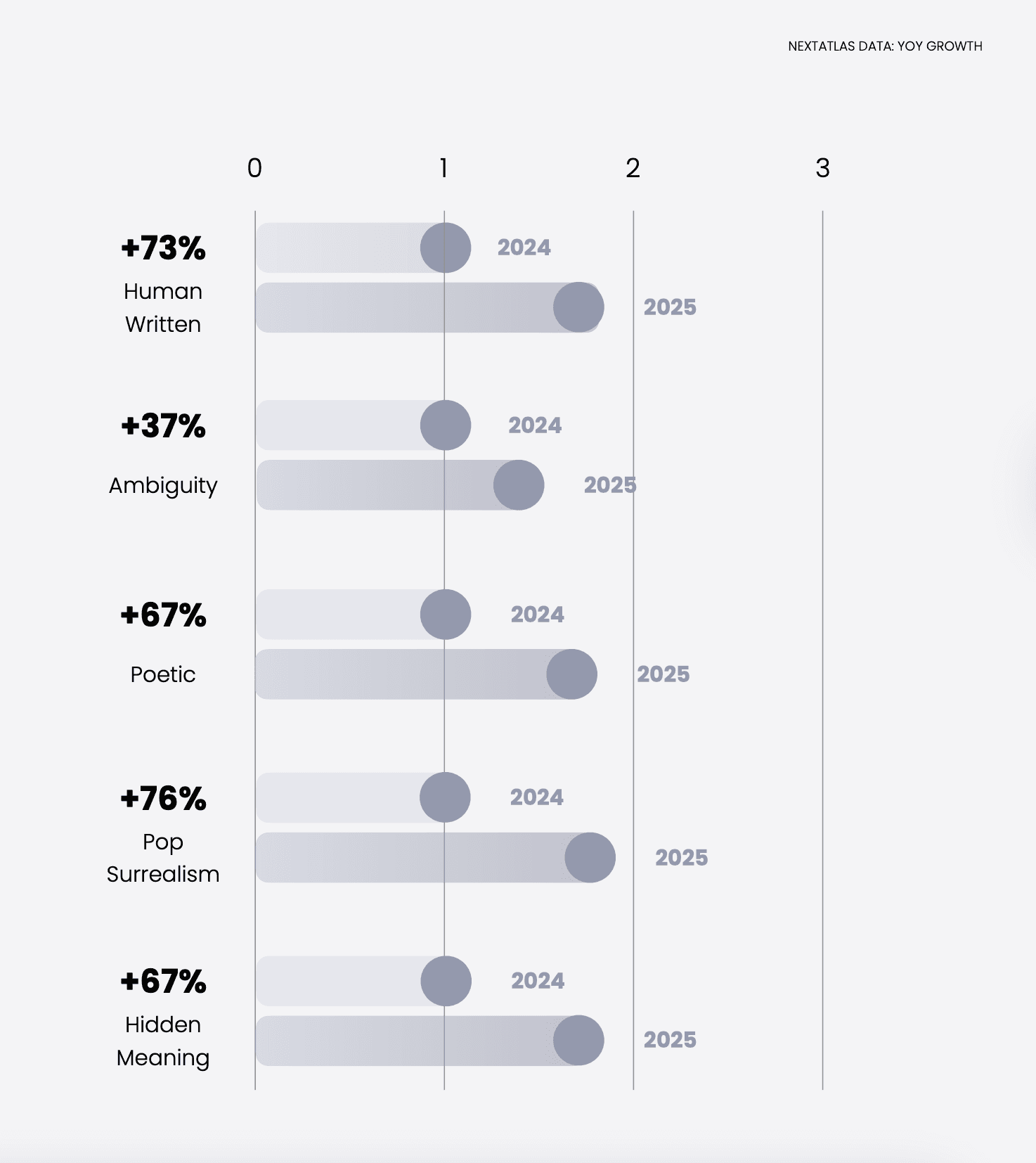
Nextatlas Data: year-over-year growth of relevant keywords related to the trend "Subtext Literacy" that proves the cultural shift
From Explanation to Interpretation
As AI systems grow more fluent in producing literal, coherent, and emotionally convincing language, humans are instinctively retreating into spaces that machines struggle to replicate. Emotion, contradiction, intuition, and ambiguity are becoming markers of depth rather than confusion.
Across visual culture, language, and design, the poetic is replacing the literal. Storytelling is no longer expected to instruct or persuade directly; instead, it is asked to evoke, suggest, and open interpretative space. Meaning is shifting from something delivered to something discovered. In this landscape, understanding is not immediate but rather, it unfolds.
In packaging and graphics, this means stepping back from explanatory claims and overt persuasion in favour of suggestion, symbolism, and visual restraint. In architecture and spatial design, it translates into environments that reveal themselves through movement rather than signage.
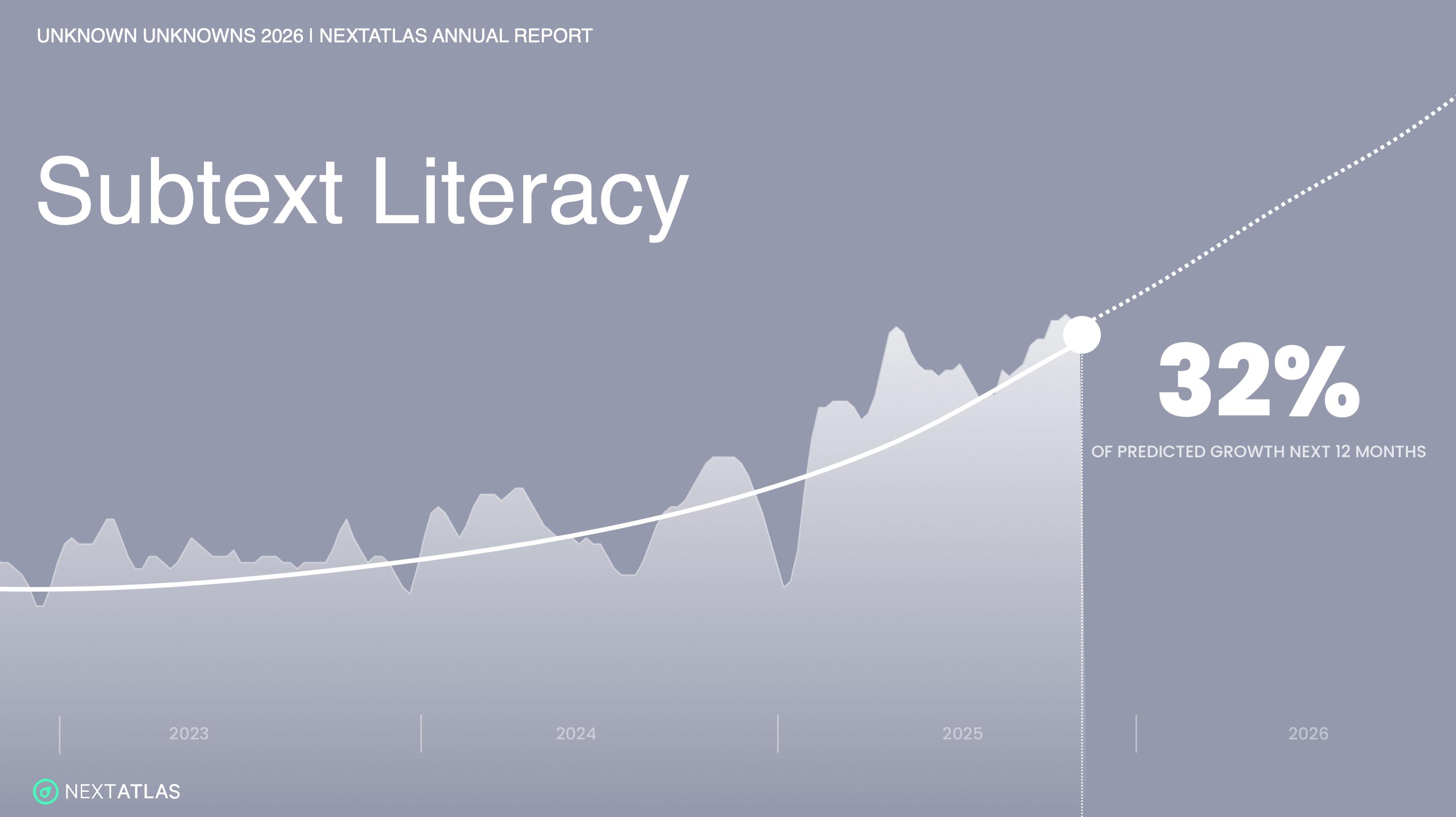
Nextatlas Data: prediction of growth over the next 12 months from the 2026 trend report
Curated Ambiguity as Cultural Value
One of the clearest expressions of Subtext Literacy is the rise of curated ambiguity. As communication becomes more frictionless, consumers are drawn to that which slows them down. Minimal messaging, reduced visual noise, hidden cues, and deliberate blankness operate as quiet provocations rather than instructions.
In this paradigm, ambiguity is not a lack of meaning but an invitation to complete it. Brands that leave space for interpretation allow audiences to project, decode, and feel a sense of ownership over the message. Meaning becomes co-created, not imposed.
This return to ambiguity also functions as a subtle rebellion against algorithmic predictability. When systems anticipate preferences and flatten surprises, ambiguity reintroduces uncertainty, curiosity, and emotional engagement. The unsaid becomes more powerful than the stated.
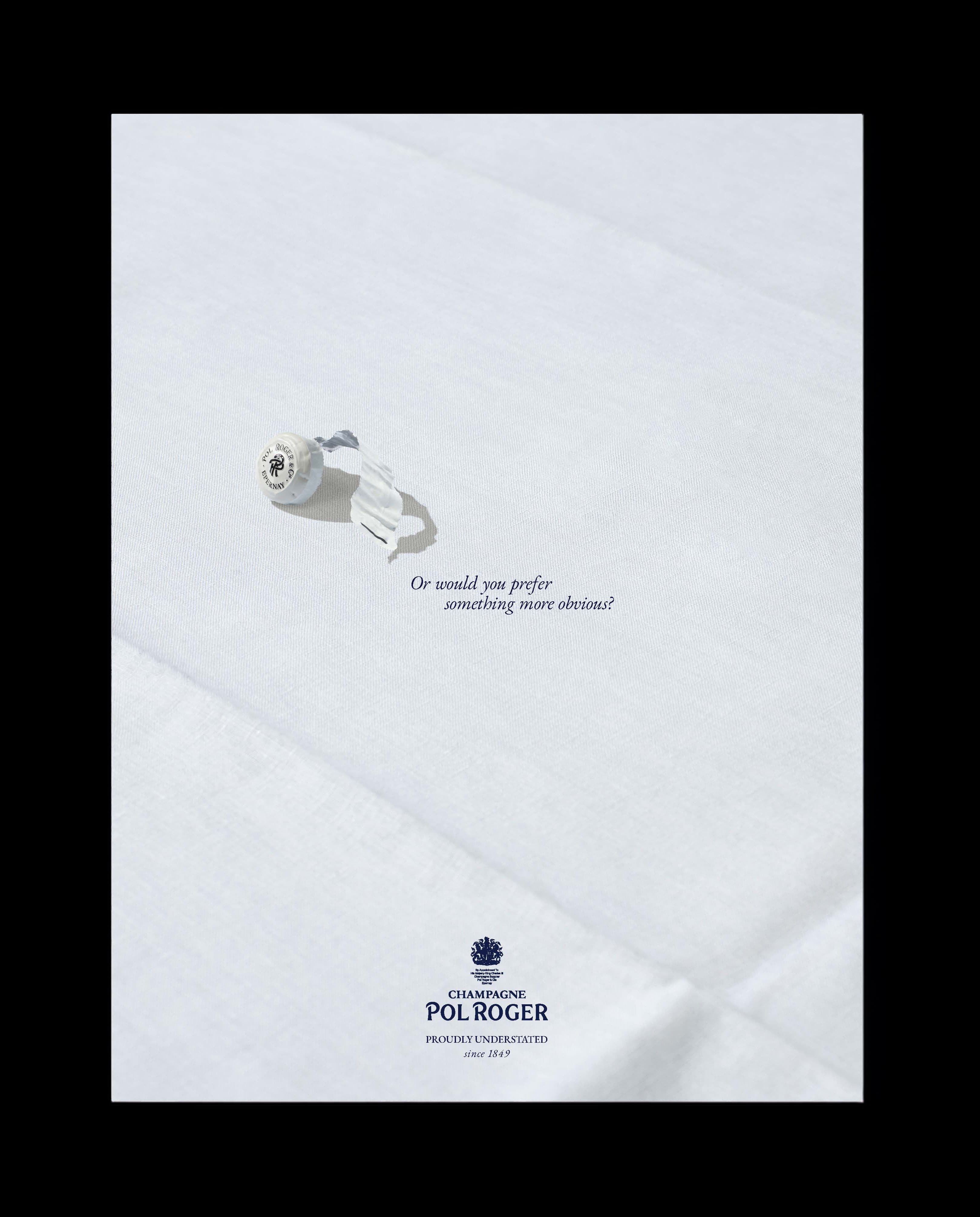
Pol Roger invites the audience to recognize the sophistication of their champagne through what’s missing (credits: LBBOnline)
Poetry as a Strategy for Engagement
As immediacy saturates the marketplace, emotion and atmosphere are emerging as new forms of differentiation. Consumers are turning away from linear narratives and prescriptive taglines towards moods, metaphors, and symbolic cues. Poetry, once confined to literature and art, is becoming a strategic language for brands.
Poetic engagement transforms products and experiences into interpretative objects rather than informational ones. Materials become metaphors, textures suggest narratives, and form carries emotional resonance. What matters is not how quickly something is understood, but how deeply it can be felt.
In this context, interpretation outweighs information. The success of communication is measured less by recall and more by resonance — by whether something lingers in memory, invites reflection, or rewards repeated engagement.
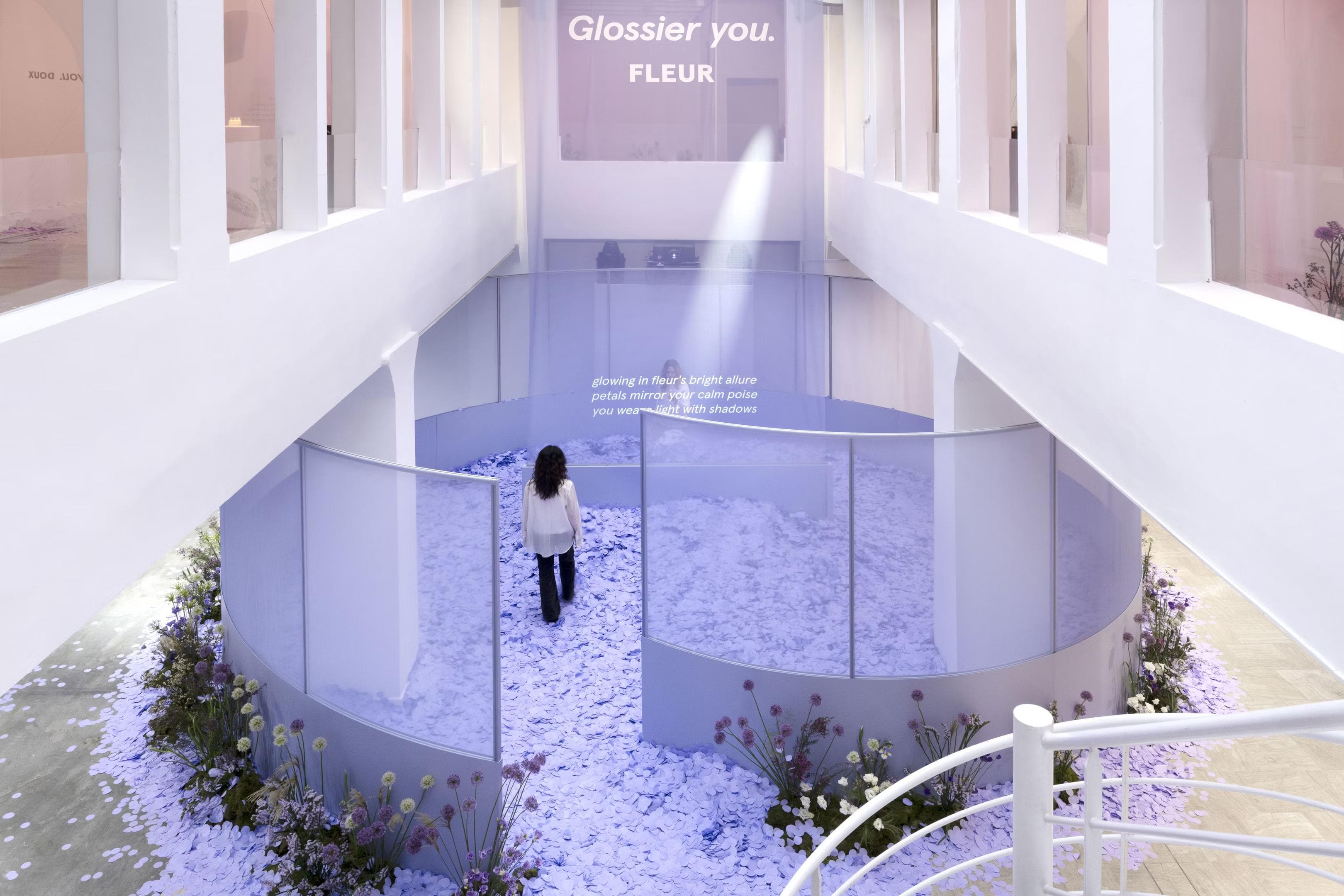
Glossier launched its Fleur fragrance with an AI-powered pavilion that generates a unique, personalised poem for each visitor the moment they lift the bottle, using hidden sensors and computer vision to translate their presence into a poetic response without visible screens or interfaces (credits: Random)
Infusing Culture into Everyday Objects
Subtext Literacy is also driving a renewed appetite for cultural depth. In a world optimised for speed, slowness becomes disruptive. Literature, art, and philosophy are quietly infiltrating everyday consumption, transforming ordinary objects into carriers of symbolic meaning.
Through cultural infusions, brands extend the lifespan of products beyond the moment of purchase. Objects become surfaces for storytelling, capable of holding emotional and cultural residue. Meaning accrues over time rather than peaking instantly.
This marks a shift from attention capture to attention cultivation. Instead of triggering a reaction, brands invite reflection. Instead of delivering messages, they create worlds to be entered and interpreted.
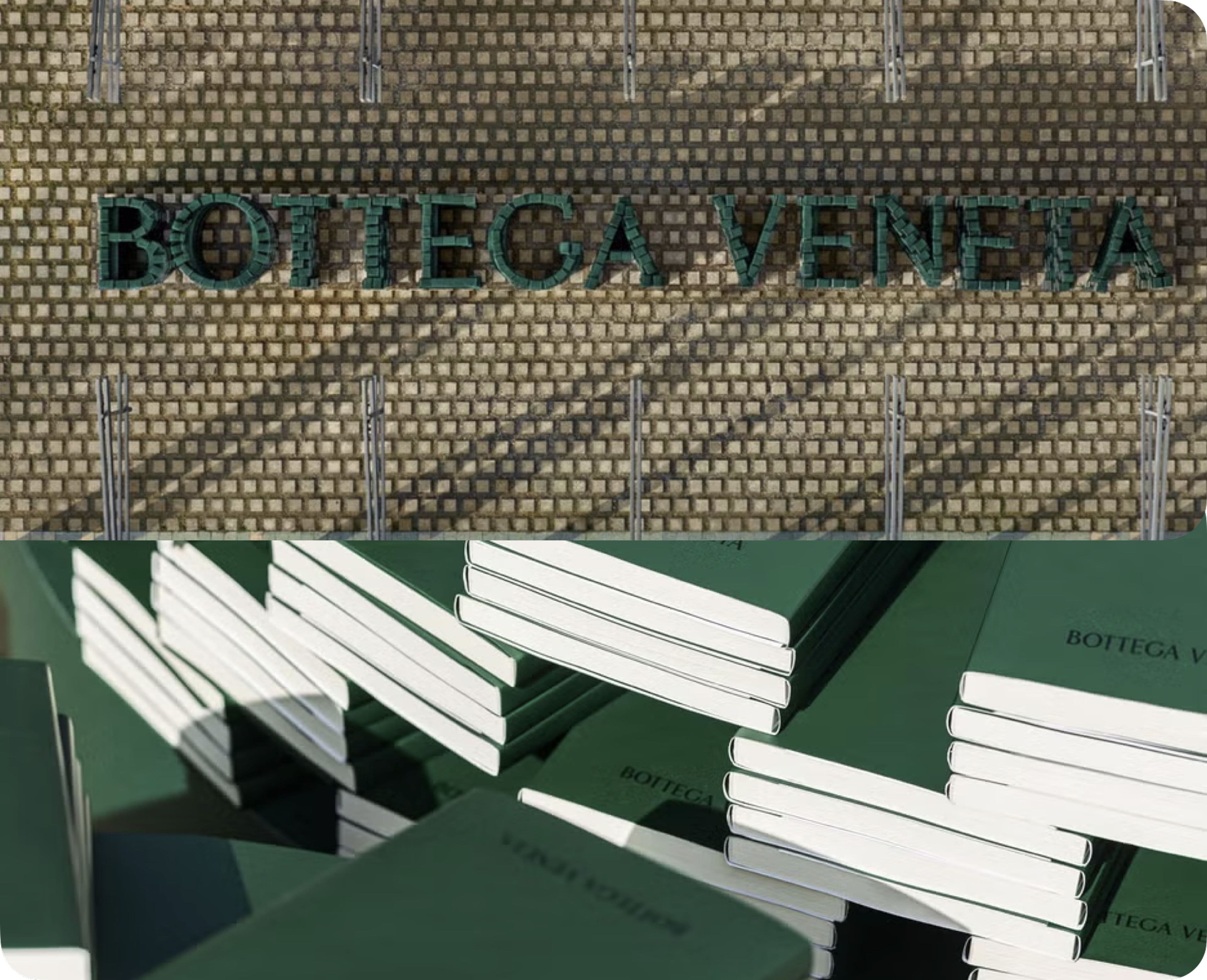
Bottega Veneta’s logo was a fleeting, participatory installation at Shanghai’s Rowing Club, where 20,000 copies of a poem by Yu Xiuhua gradually erased the brand mark as visitors took them away (credits: Le Pub)
Actionable Insights for the top Industries impacted by Somatic Intelligence
- Art & Design: In a culture fatigued by immediacy, value accrues to works that invite audiences to linger, decode, and return. Ambiguity, symbolism, and poetic abstraction are no longer barriers to understanding but tools for depth — allowing viewers to participate in meaning-making and complete the narrative themselves rather than passively consume it.
- Packaging & Graphics: Instead of crowding the surface with big claims or visual noise, brands are experimenting with restraint — hidden cues, minimal messaging, poetic copy, and even deliberate blankness. Packaging shifts from persuasion to invitation, where absence itself becomes a signal, encouraging curiosity, interpretation, and a more thoughtful moment of engagement at the point of encounter.
- Architecture & Spaces: Success is measured less by efficiency and more by how long a space holds attention and how deeply it is interpreted. Embracing ambiguity, symbolism, and narrative cues creates environments that invite curiosity rather than direction. Spaces become experiential texts to be read over time, where meaning unfolds through movement, perception, and presence.
Stay ahead and request your custom trend analysis today!
Subtext Literacy is one of three key trends reshaping consumer behavior in 2026. Brands that adapt will stay relevant and build deeper connections. Contact us for a tailored analysis of what Subtext Literacy can unlock for your brand.
Trend lines, data, and information described in this article emerge from the ongoing analysis performed by Nextatlas on its global observation pool made of innovators, early adopters, and industry insiders. Discover Nextatlas Methodology →