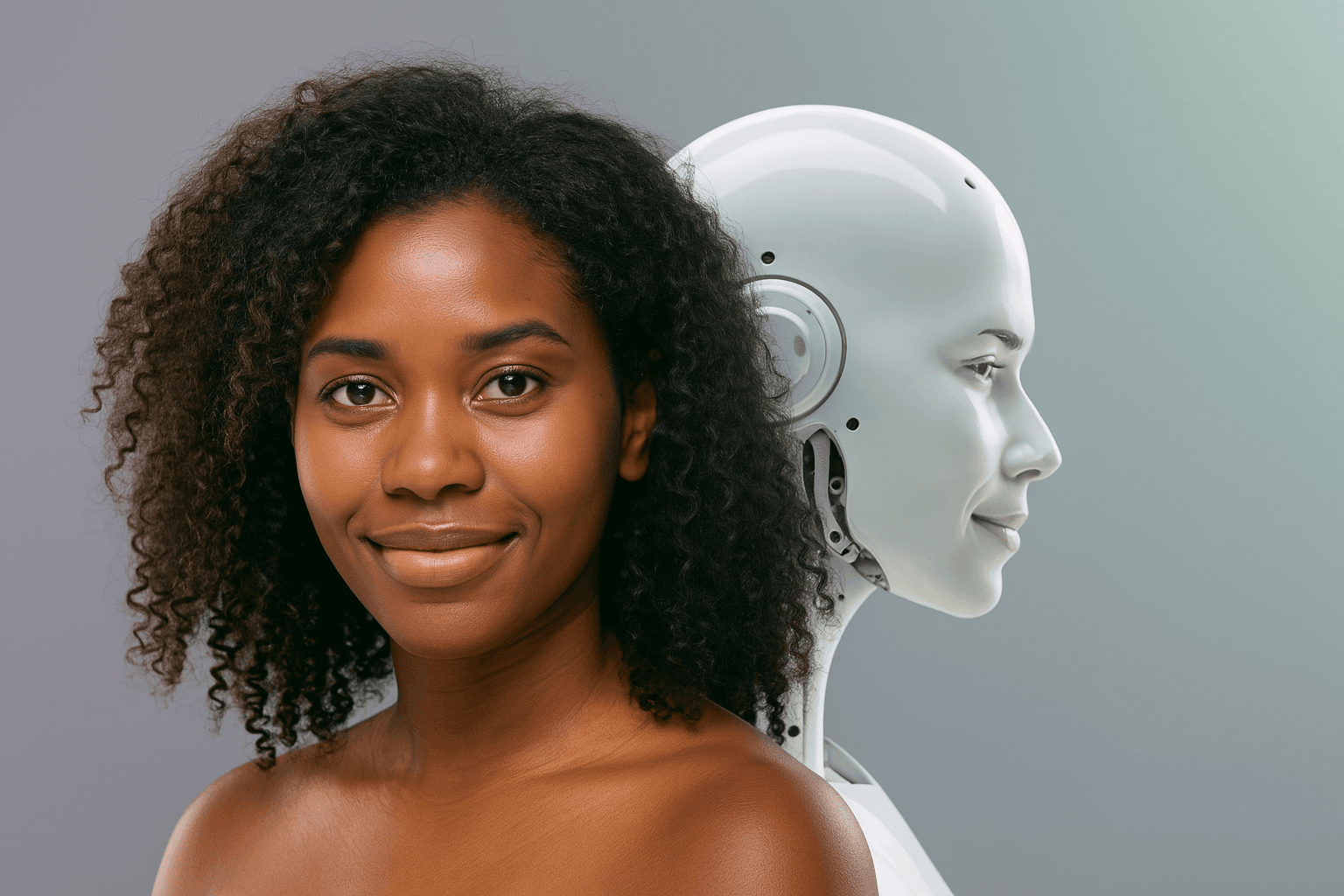
Somatic Intelligence: The Body Is Becoming Culture’s New Authority
In 2026, intelligence will be measured less by articulation and more by attunement. The most resonant products, spaces, and narratives will be those that recognise the body not as an interface, but as an authority. In an age where everything can be said, what matters most is what can still be felt.
Consumers are shifting from thinking to feeling, relying on the body’s instinctive signals as the new source of truth and value in an AI-saturated world.
The full version of this trend, along with multiple business case studies, is available to read in our “Unknown Unknowns 2026” trend report.
What is Changing?
As artificial intelligence becomes fluent in language, logic, and emotion, culture is quietly re-centering around something machines still cannot convincingly replicate: the human body. In a world saturated with perfectly articulated meaning, automation, algorithmic optimisation, and synthetic voices, truth is no longer sought in what is said, but in what is felt and in sensations.
This is the cultural context in which Somatic Intelligence is emerging, one of the defining consumer and market trends of 2026. It's not as a wellness trend or a design aesthetic, but as a new form of literacy, one where sensation precedes interpretation, and where knowing begins beneath conscious thought.
Rather than operating at the level of rational evaluation, Somatic Intelligence describes a growing reliance on bodily signals as a source of meaning and trust. For consumers navigating cognitive overload, the body is emerging as the most credible decision-making system available. What feels right increasingly matters more than what makes sense, signalling a profound reorientation in consumer behaviour that is going to transform fashion, advertising, and food and beverage.
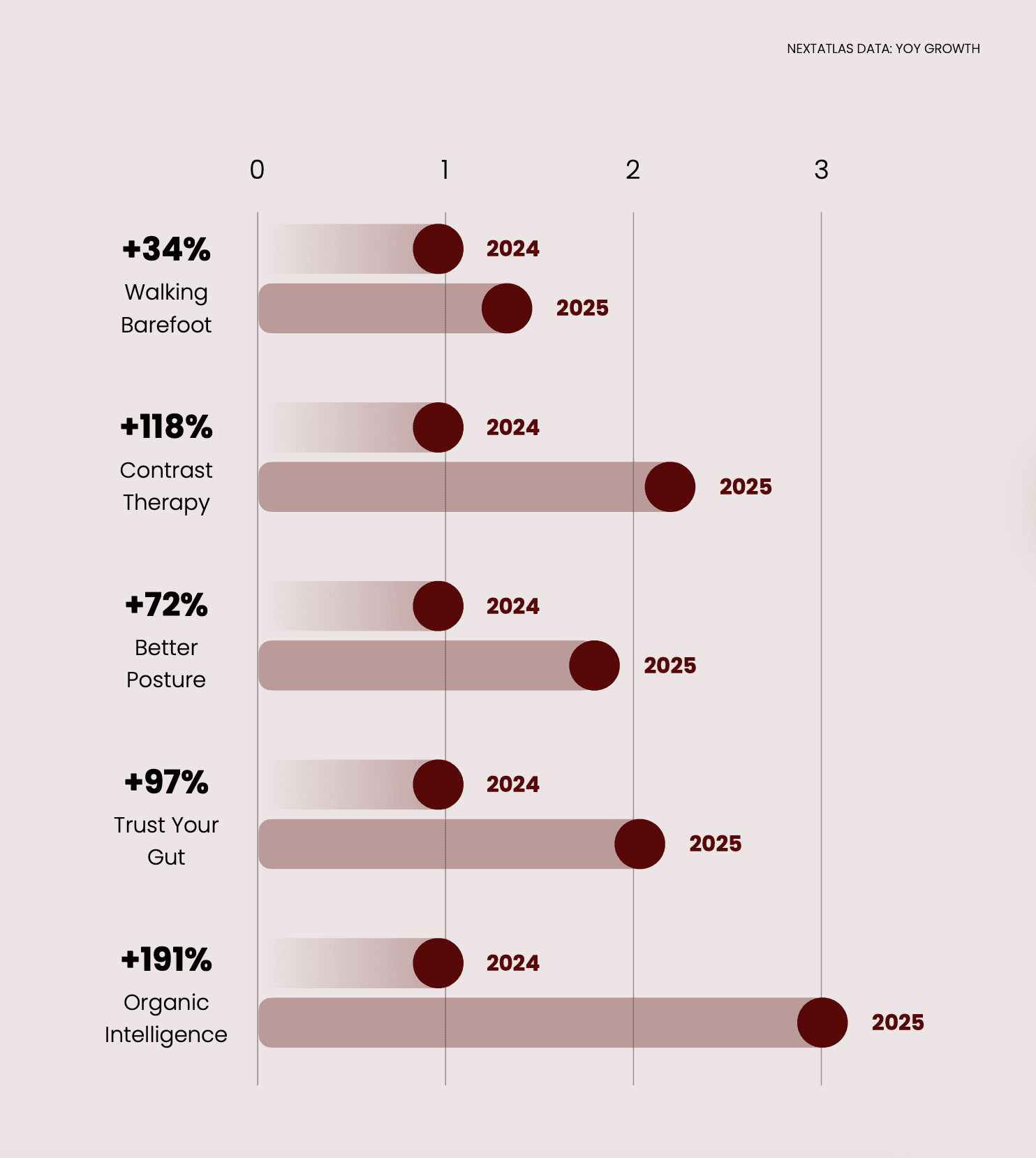
Nextatlas Data: year-over-year growth of relevant keywords related to the trend "Somatic Intelligence" that proves the cultural shift
Consumers Are Trusting the Body Over the Mind
Across markets, trust is migrating away from analytical reasoning and towards visceral experience. As AI systems master language and emotional mimicry, consumers are becoming sceptical of anything that feels overly articulated or strategically optimised. In response, they are turning inward, privileging gut feelings, physical reactions and embodied intuition.
This shift is visible in how consumers evaluate products and experiences. In fashion, comfort, breathability, weight, and skin interaction are becoming decisive factors alongside aesthetics. In the food and beverage industry, texture, temperature, and mouthfeel increasingly shape preferences before flavour is consciously identified. In advertising, emotional credibility is judged not by clarity of message but by whether a campaign produces a bodily response — a pause, a shiver, a sense of recognition.
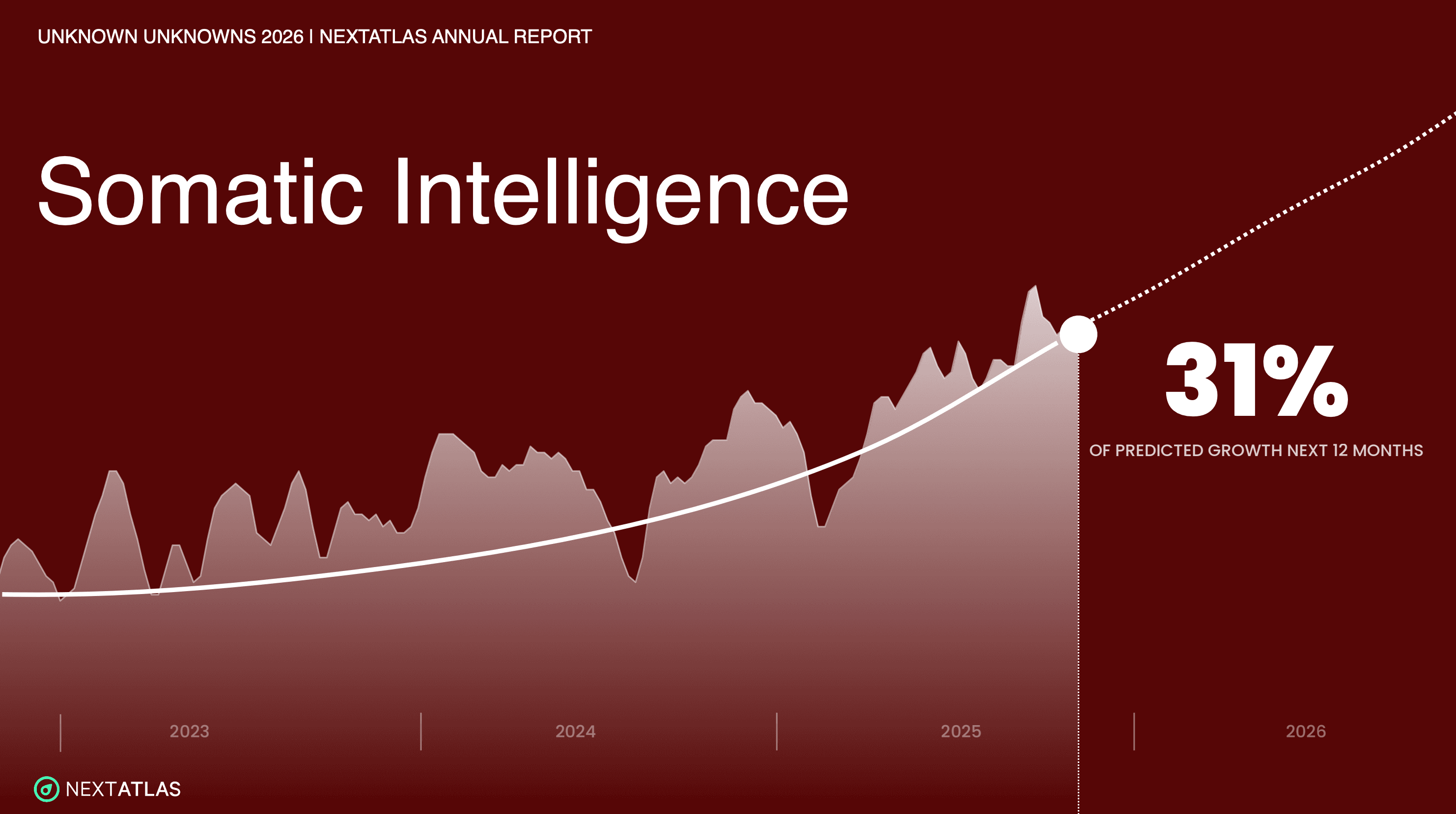
Nextatlas Data: prediction of growth over the next 12 months from the 2026 trend report
Precognitive Engagement and the Future of Consumer Decision-Making
Somatic Intelligence operates below conscious thought. Attention, preference, and judgement are increasingly formed before the rational mind has time to intervene. Consumers are no longer asking whether a product, brand, or message is logical; they are asking whether it registers physically.
For brands, this marks a profound transformation in how connection is built. Engagement is no longer secured through clarity or persuasion, but through immediacy and physical impact. Products and experiences are expected to imprint themselves somatically, creating a felt response that bypasses rational filtering. Intelligence, in this sense, is no longer cognitive mastery, but embodied attunement.
This rise of precognitive engagement is fundamentally reshaping influence. Touch, rhythm, visual persistence, and tactility are becoming strategic tools across industries. Advertising is shifting towards formats that imprint on the senses rather than persuade through claims. Food brands are designing packaging and plating to trigger expectation through feel and form. Fashion brands are creating garments that convey value through their fit, stretch, and movement on the body. In each case, the body reacts first — and that reaction increasingly determines choice.

By measuring the electrical brain impulses triggered when customers smell different accords, YSL's new Scent-Sation technology can recommend the best-suited scents (credit: YSL Beauty)
From Storytelling to Somatic Cues
As Somatic Intelligence reshapes consumer expectations, storytelling itself is evolving. Overproduced narratives are giving way to somatic cues, such as warmth, rhythm, tactility, and proximity, that transmit meaning faster than language.
What emerges is a new hierarchy of trust. As cognitive authority erodes, the body becomes the primary decision-maker. Products and experiences are expected to speak to nerves, skin and gut before they ever reach the rational mind. Brands that continue to rely on overproduced storytelling risk feeling abstract or distant; those that design for somatic cues meet consumers where judgement now begins.
This shift is particularly visible in advertising formats, fashion retail environments and food experiences designed to be felt before they are understood. Products and campaigns that succeed in 2026 will be those that engage the nervous system first, meeting consumers at the point where judgement now begins.
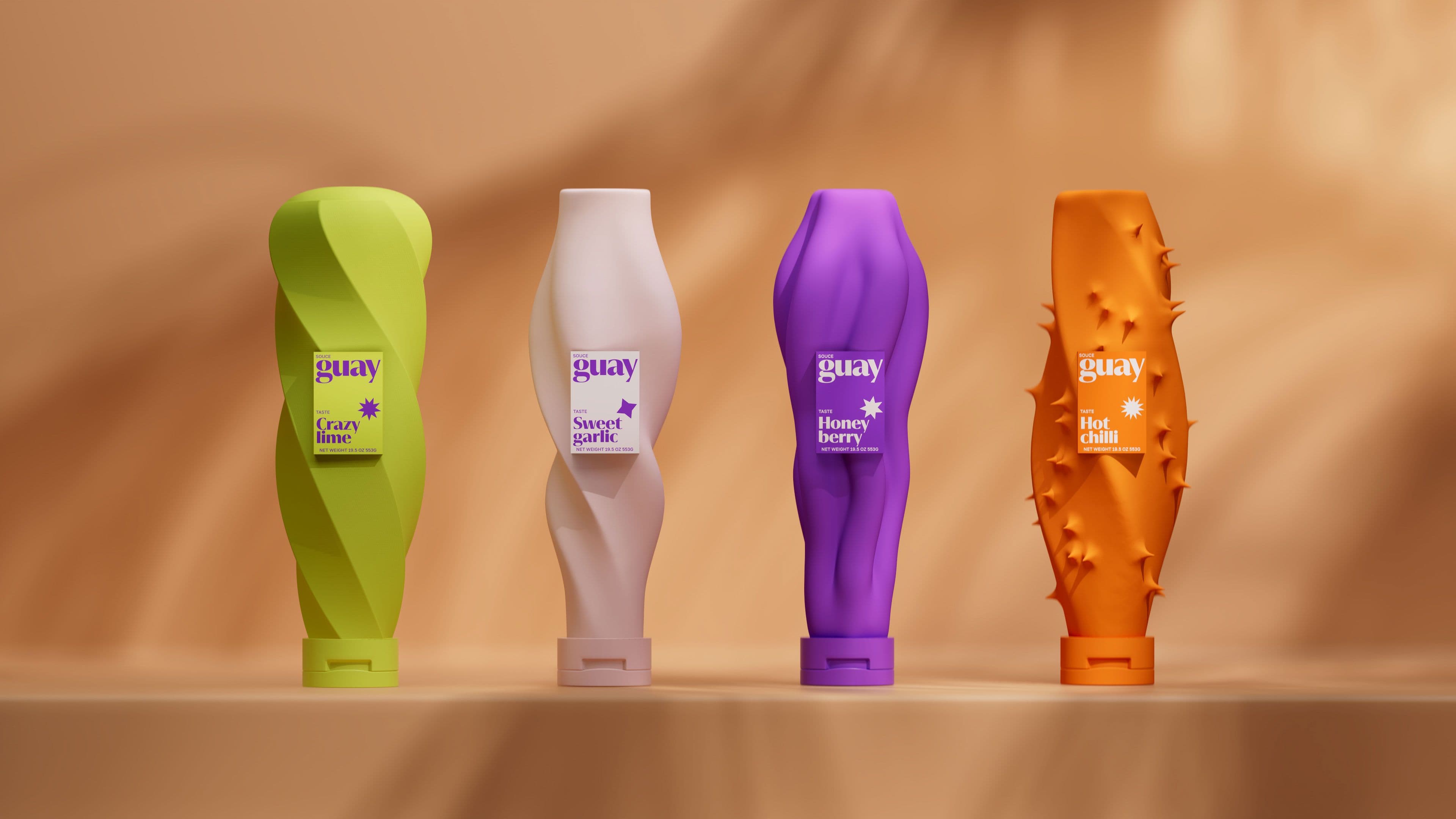
Guay's label-free, sculptural packaging that expresses the product's flavour in a visual and haptic way (Credit: World Brand Design)
Re-Inhabiting the Body Against AI Saturation
This shift is not a rejection of technology, but an adaptation to it. As AI-generated language floods the market, bodily signals regain value precisely because they resist optimisation. The body reacts in real time, without polish or performance. It remembers experiences through sensation rather than narrative.
At its core, Somatic Intelligence reflects a collective desire to re-inhabit the body after years of abstraction, acceleration, and digital mediation. Consumers are not seeking perfection or efficiency, but attunement — the ability to feel grounded and responsive in an increasingly synthetic world.
Fashion, advertising and food and beverage are leading this shift because they operate closest to the body. They are the industries where sensation, presence and physical response are most immediate — and therefore where this trend is most visible in the marketplace.
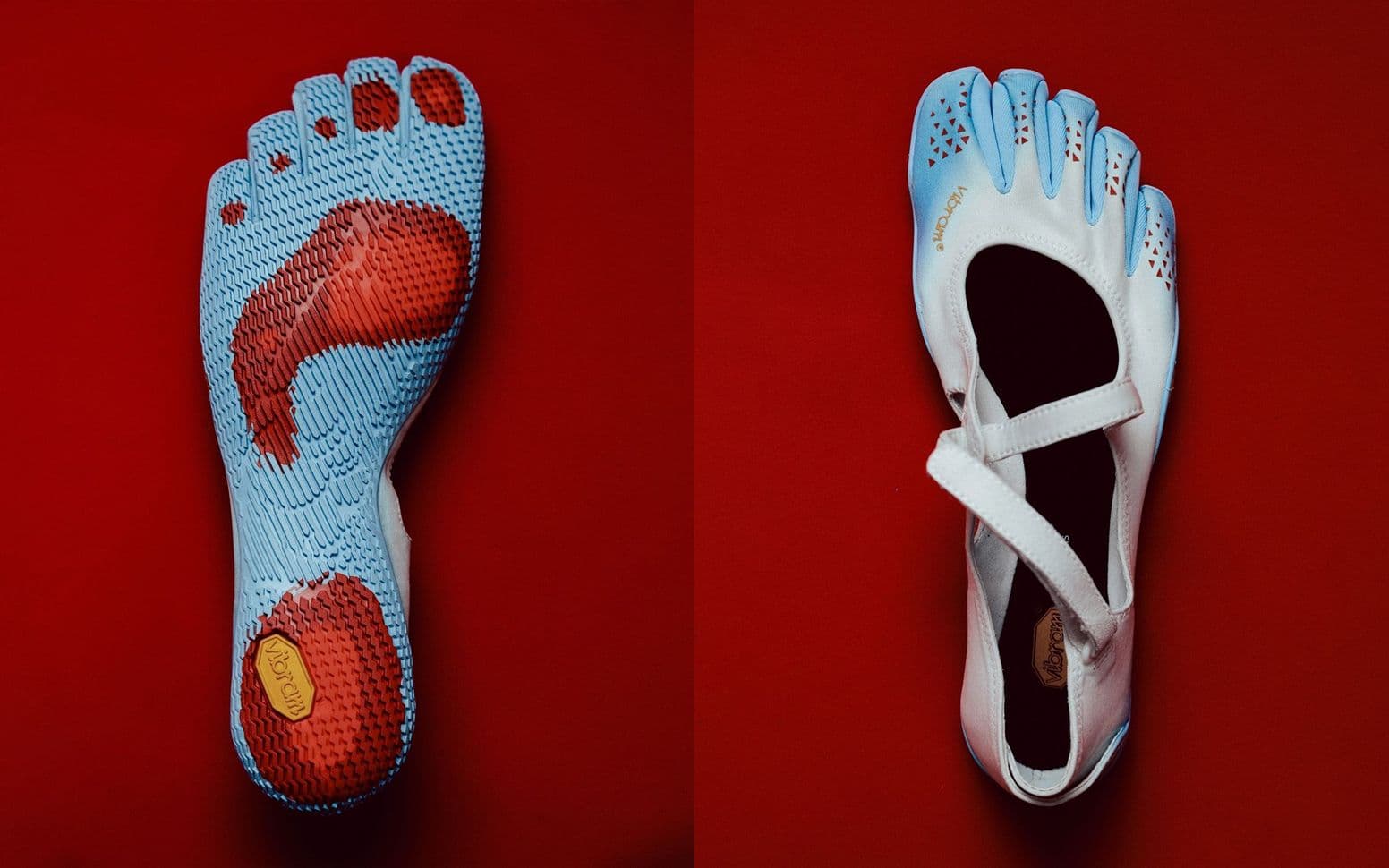
The special edition of Vibram's new FiveFingers V-Soul has a Foot Map sole as a literal visualisation of how pressure and energy disperse through the foot (Credits: Vibram)
Actionable Insights for the top Industries impacted by Somatic Intelligence
- Fashion: Fashion is shifting from visual expression to physiological impact. Value is no longer defined by how clothes signal identity, but by how they interact with the body — regulating comfort, sensation, and emotional state. Garments evolve into systems of support and attunement, where texture, breathability, pressure, and movement shape how the wearer feels, not just how they appear.
- Advertising: As cognitive trust erodes, persuasion moves beneath conscious thought. Effective campaigns no longer convince through explanation, but resonate through somatic cues — rhythm, tactility, visual persistence, and embodied emotion. Meaning is imprinted rather than interpreted, with physical reaction becoming the primary signal of authenticity and memorability.
- Food & Beverage: Flavour is becoming an embodied experience rather than a purely gustatory one. Texture, temperature, weight, and tactility increasingly shape perception before taste is consciously registered. From packaging to plating, brands must design for how food is physically encountered — recognising that expectation, sensation, and feeling now define quality long before the first bite.
Stay ahead and request your custom trend analysis today!
Somatic Intelligence is one of three key trends reshaping consumer behavior in 2026. Brands that adapt will stay relevant and build deeper connections. Contact us for a tailored analysis and see what you can do with Somatic Intelligence
Trend lines, data, and information described in this article emerge from the ongoing analysis performed by Nextatlas on its global observation pool made of innovators, early adopters, and industry insiders. Discover Nextatlas Methodology →