Inside the Bain Digital (R)Evolution Awards 2025
A data-driven look at how AI is reshaping work, skills, search, and consumer behavior, based on Nextatlas’ presentation at the Bain Digital (R)evolution Awards 2025. Discover the emerging signals defining the next consumer, the next workplace, and the new competitive landscape.
The fourth edition of the Bain Digital (R)evolution Awards 2025 brought institutions, companies, and innovators together at Spazio Gessi in Milan for an evening that made one thing clear: AI is no longer a technological theme; it is a cultural, organizational, and societal shift shaping the way people work, decide, and live. As national and European institutions outlined the strategic urgency of governing this transformation, Nextatlas was invited to contribute a perspective that is increasingly essential for businesses: understanding where AI is heading requires understanding how consumers are changing.
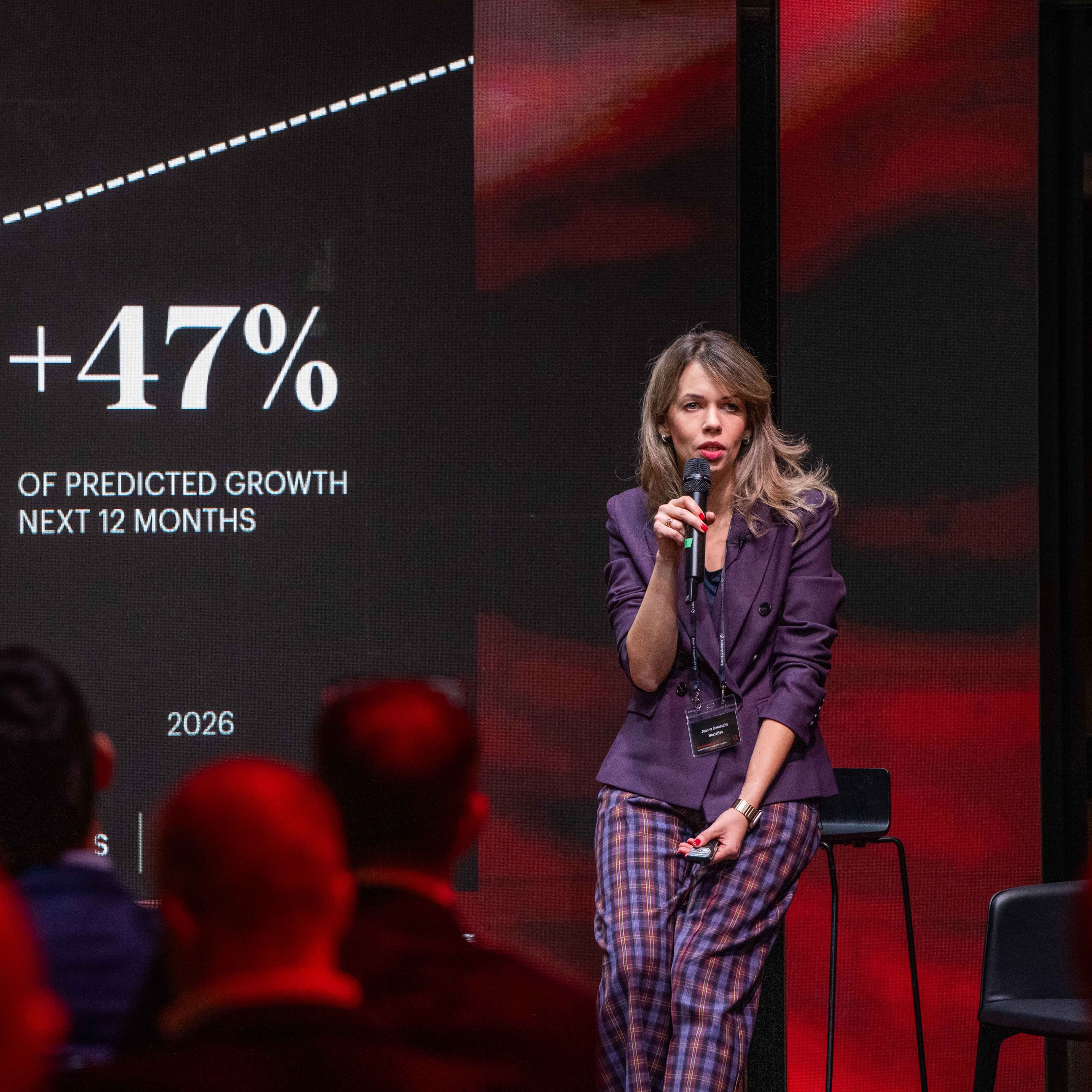
Our Insights Manager, Joanna Damaszko, presented "AI and the Next Wave of Change: Shifting Consumer Behaviors", a synthesis of the most advanced signals emerging from the Nextatlas platform, combined with the foresight that has characterized our work since 2012. The findings highlighted how AI is reshaping not only technological capabilities but also expectations, fears, habits, and the cognitive environments in which decisions are made.
The conversation set the tone for the evening. It is a time when technology and creativity must converge to support evolving human needs, while institutions and companies collaborate to harness AI’s potential into tangible value. That urgency resonated throughout the event, from discussions with the European Commission to fireside chats with leaders from Palantir, AWS, LinkedIn, EssilorLuxottica, and other prominent companies.
Within this context, Nextatlas brought evidence of how deeply AI is already transforming the lived experience of consumers.
A Workforce Under Pressure: The Disappearance of the “Beginning”
One of the strongest signals presented in our analysis concerns the future of work. As shown in our report, AI-related conversations increasingly question the very notion of entry-level roles, with job displacement showing +83% predicted growth and the topic as a whole projected to rise by +91% in the next 12 months.
As Joanna explained on stage, using the language of the consumers themselves: “The first workers who feel fear—perhaps even anxiety—are the youngest ones, the people who haven’t yet entered the workforce. Many of the tasks traditionally given to junior employees are now seen as the easiest to automate. The fear is not just losing a job, but never having the chance to enter the job market at all.”
Yet, she made clear that this concern is not limited to young professionals. Senior workers, too, feel the weight of transition.
“In a world of agentic AI, we won’t just collaborate with colleagues—we will collaborate with intelligent agents. This requires a new level of competence. We will need to see our roles from above, orchestrating processes rather than performing them. And that is difficult. Not everyone will make this shift.”
AI, therefore challenges every level of seniority. It removes old career paths, rewrites expectations, and requires entirely new forms of expertise.
Soft Skills as the New Hard Skills
Our data confirms this transformation: the concepts of teamwork, emotional intelligence and empathy are predicted to grow sharply, with human judgment alone showing a remarkable +113% forecast over one year.
Joanna highlighted why this inversion of value is happening. “As intelligence becomes a commodity—something everyone can access through assistants that make us appear more productive and more effective—the real differentiators become soft skills. Consumers mention empathy, emotional intelligence, teamwork and ultimately human judgment. At the end of every automated chain, a human decision still makes the difference.”
In a context where AI amplifies everyone’s cognitive abilities, what makes workers, creators, and professionals unique is no longer their efficiency but their humanity.
The Race for Proprietary Data
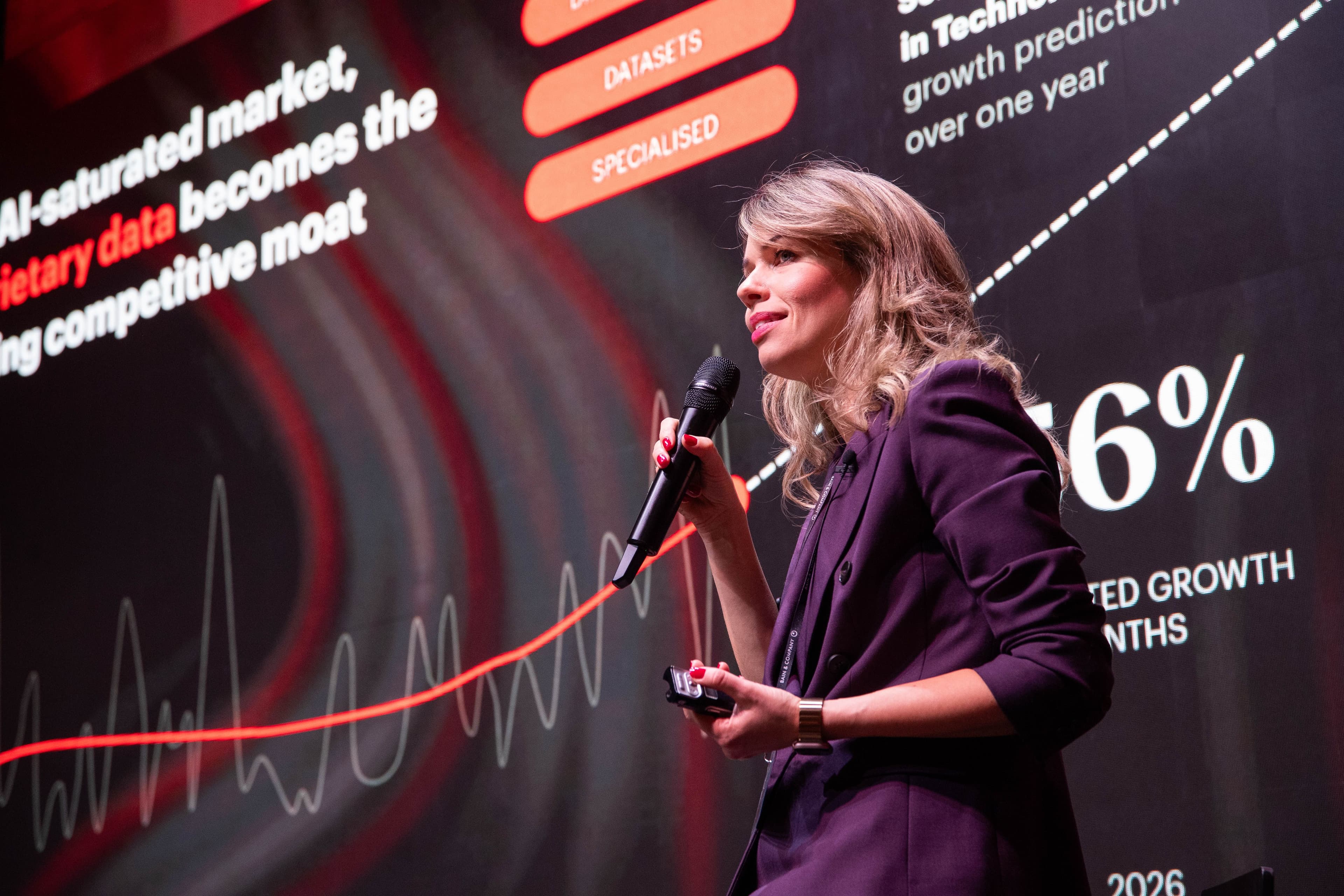
In parallel with the transformation of skills, companies are facing an equally decisive shift: the growing strategic importance of proprietary data. Our insights show a +56% growth projection in conversations around data differentiation, with strong signals regarding self-sovereign technology (+84% over one year).
The saturation of AI tools means that competitive advantage no longer lies in technology alone. As Joanna emphasized, organizations must increasingly rely on their own data ecosystems, assets that cannot be replicated and that shape how models perform. In a market where every company has access to similar tools, the uniqueness of one’s data becomes the defining moat.
This is also where the Nextatlas model of combining AI scientists, data strategists, and foresight experts comes into focus.
The Rise of Synthesized Authority
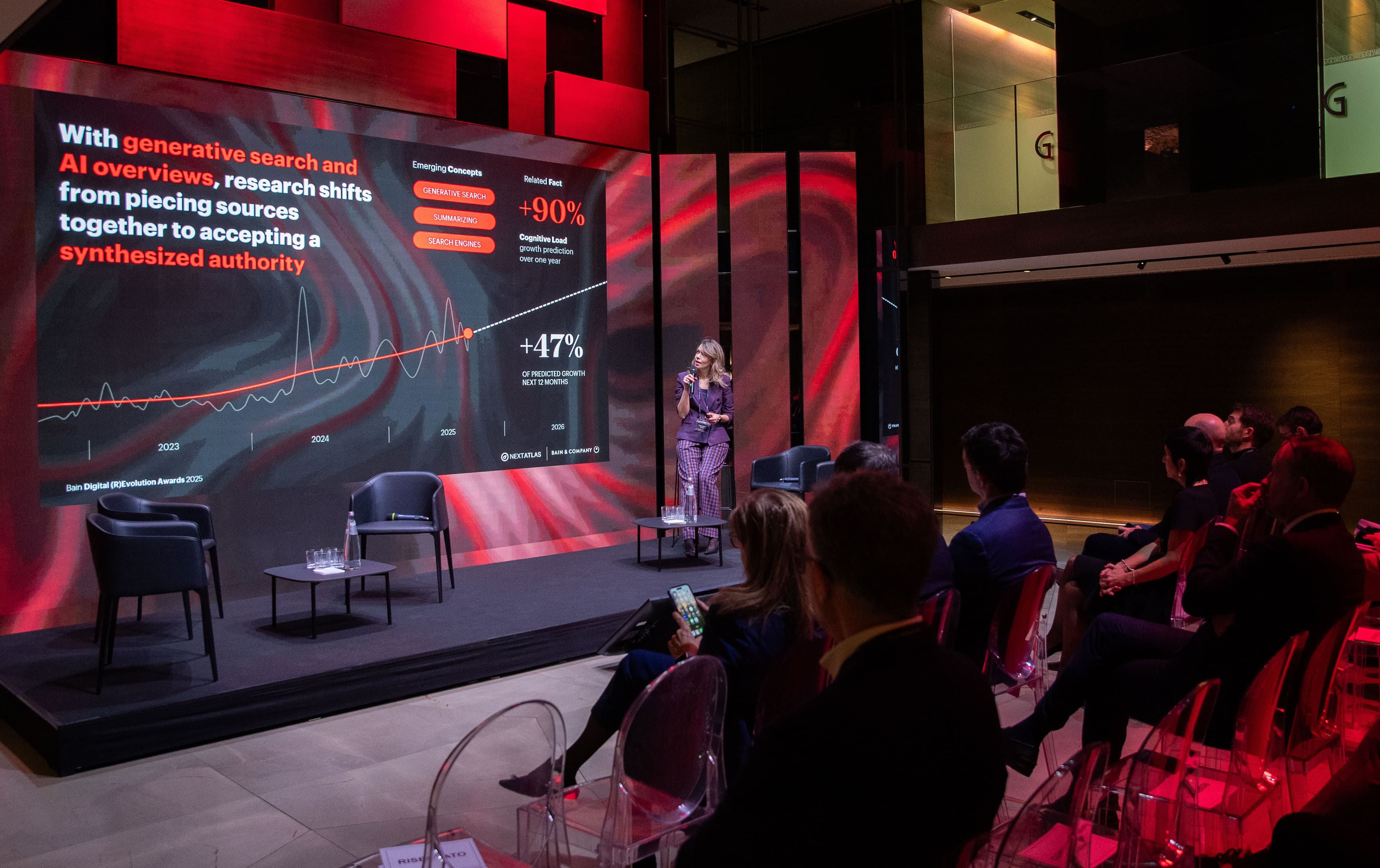
Among the most profound behavioral shifts is the transformation of how people search, verify, and evaluate information. According to our analysis, concepts related to generative search and AI overviews are projected to grow +47%, while discussions around cognitive load rise by +90% over one year.
Joanna captured this change succinctly: “The classic Google search—where we once scrolled through links and results—has become something else entirely. We now rely on the single synthesis that the engine provides. That synthesis is effective, personalized, and often enough for us. But brands and institutions have lost control over how they appear online. It is no longer their keywords or press releases that define their presence, but a summary created by an AI.”
This shift reshapes attention, engagement, and discoverability. The first touchpoint between consumers and brands is no longer crafted by marketing teams—it is generated by an algorithm.
The Everyday Companion and the Conversational Consumer
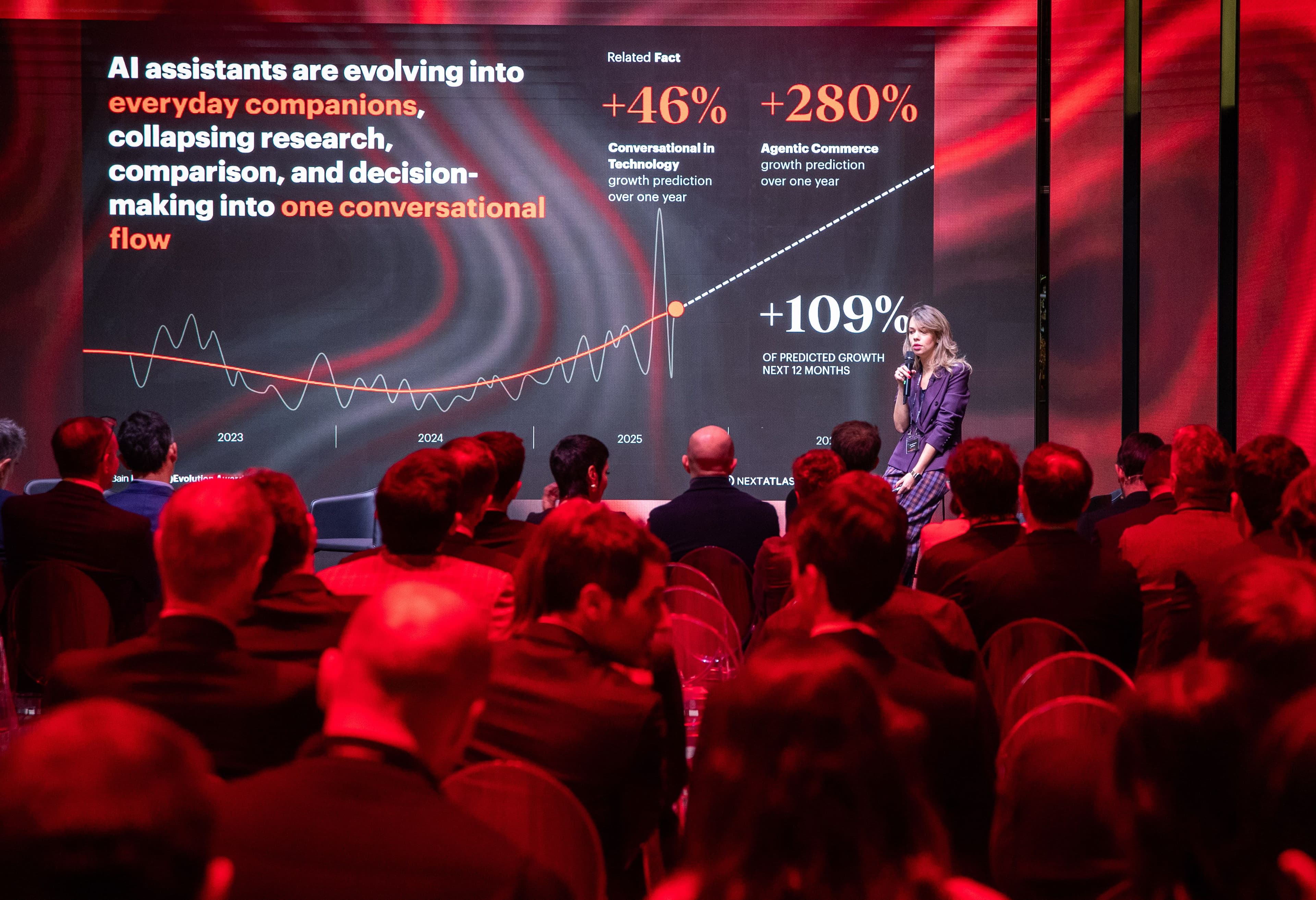
The evolution of AI assistants into everyday companions emerged as one of the evening’s most thought-provoking topics. Page 8 of our report shows +109% expected growth for this category, with agentic commerce soaring to +280%.
Joanna expanded this point with a cultural lens: “People are not only searching with AI—they are discovering, comparing, and deciding within a single conversational flow. This happens in spaces that feel intimate: in the kitchen, at the gym, even in moments of emotional reflection. If recent campaigns show AI as an everyday companion rather than a professional tool, it is because consumers increasingly treat these agents as cognitive and emotional partners.”
In this new landscape, brands must understand that the most important commercial and cultural interactions do not happen in feeds or storefronts, but inside conversations mediated by AI. These spaces will become the new battleground for attention and loyalty.
A Moment of Acceleration and Anxiety
Many executives at the event expressed a recurring concern: Are we late? As Erich Giordano observed in his reflection after the Awards, this fear often pushes companies to take action to avoid falling behind, rather than to respond to real strategic needs. He reminds us that the right question is not what to build or which AI tools to adopt, but rather: Where do you want to go? Only with clarity of destination can organizations design intentional, future-ready transformation paths.
The Digital (R)evolution Awards were an opportunity to demonstrate how AI is reshaping not just business landscapes but the human experience underlying them. The shift toward agentic technologies will influence how people work, learn, make decisions, and form relationships with brands. But it is consumer behavior—its fears, desires, and adaptations—that will ultimately determine which innovations will succeed.
See all the data presented at the Bain Awards 2025
Discover the emerging mega trends and insights shaping the future of work and the future consumer — from AI and agentic technologies to new work dynamics and shifting and impacted behaviors.
Trend lines, data, and information described in this article emerge from the ongoing analysis performed by Nextatlas on its global observation pool made of innovators, early adopters, and industry insiders. Discover Nextatlas Methodology →